If you are putting your logo on a resistance loop, the first real decision is not color or artwork. It is whether the band is woven fabric or molded latex. The two feel different in the hand, train the glutes differently, and behave very differently under a screen printer or an embroidery machine. Choosing the wrong one means a product that rolls up mid-set, cracks along the print, or simply does not carry your brand the way you pictured. This guide walks through the differences that matter when you are ordering in quantity for a gym, a studio, or a fitness brand.
The core difference: woven elastic versus pure rubber
A fabric booty band is a sleeve of elastic textile, typically a polyester or cotton blend woven around internal rubber threads. It is wide, matte, and grippy. A latex band is exactly what it sounds like: a continuous loop of rubber, thinner and stretchier, usually with a slightly tacky or glossy surface. That single material choice drives almost everything a buyer cares about downstream.
The most visible difference in use is grip. Fabric bands are cut wide and lined with silicone grip strips on many models, so they stay put on the thighs during hip thrusts, lateral walks, and squats. Latex mini bands are narrower and tend to roll or ride up the leg as the muscle contracts, which is the single most common complaint you will hear from lifters. If your customers train glutes specifically, that stay-put behavior is a genuine selling point, and it is the reason fabric has taken over the “booty band” category even though latex is cheaper.
Sizing and resistance: what the numbers actually mean
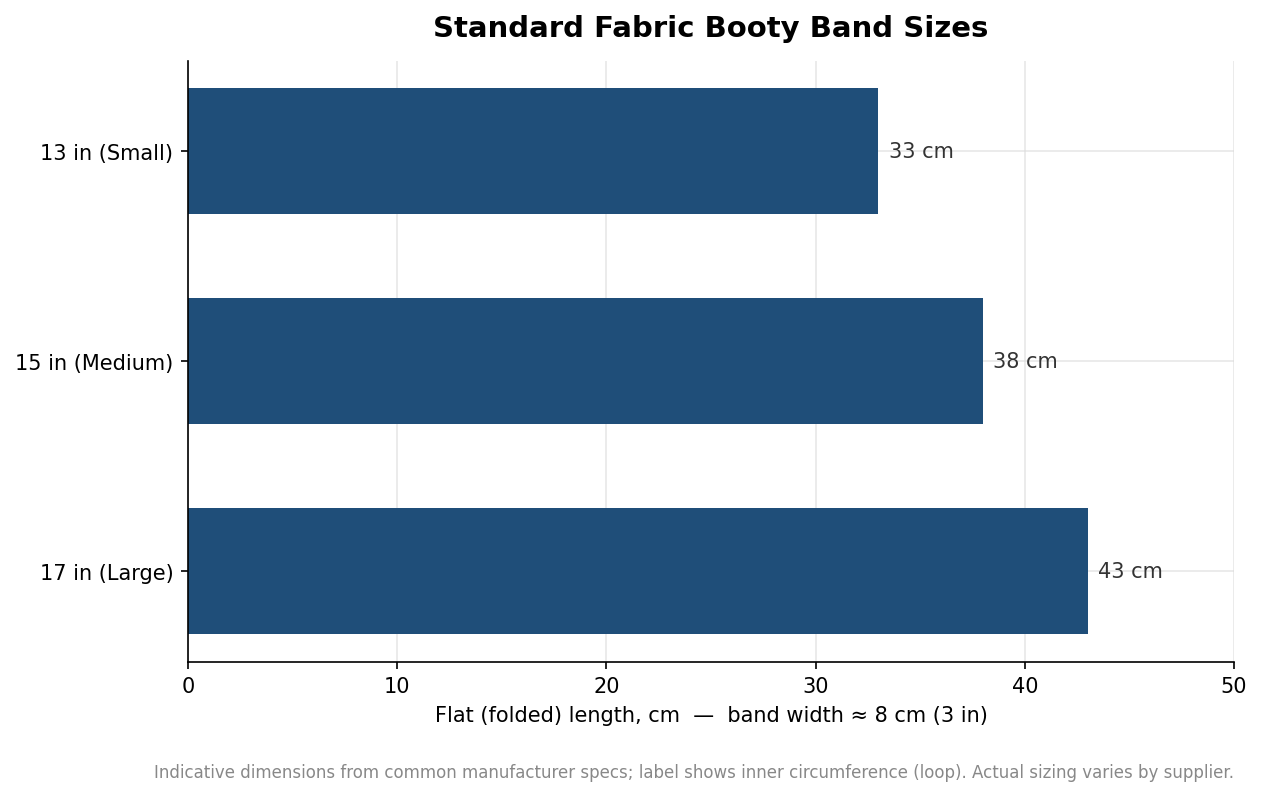
Fabric bands are sold by circumference. The three sizes you will see most often are a roughly 13-inch loop for smaller frames or ankle work, a 15-inch loop as the everyday standard, and a 17-inch loop for larger thighs or above-the-knee placement. Laid flat, those correspond to folded lengths of about 33, 38, and 43 centimeters, at a band width near 8 centimeters. These figures are indicative of common manufacturing specs rather than an industry standard, so confirm the exact loop size with whichever factory you use.
Resistance is where the two materials diverge sharply. Fabric bands are usually offered in two or three levels, marketed as light, medium, and heavy, because the woven construction limits how much you can vary the pull without changing the whole build. Latex bands stretch across a wider band of resistance and are commonly sold in sets of five graduated levels. Here is the important caveat for anyone writing product copy: there is no shared standard for what “medium” means in pounds. One brand’s heavy is another brand’s medium. If you plan to print a resistance rating on the band or the sleeve, define it against your own measured pull, and avoid implying a precise pound figure you cannot verify.
Which material prints better
This is the question most branding buyers underweight, and it usually decides the order. Fabric bands are a large, flat, matte canvas. They take screen printing, heat transfer, dye sublimation, and woven-in jacquard logos, and because the band is wide you get a long wrap of print real estate for a repeating logo or a full name. The print sits on textile, so it flexes with the weave rather than fighting it.
Latex is harder to decorate well. Ink can be screen printed onto rubber, but the surface stretches far more than fabric, so a solid logo printed at rest will thin and can craze when the band is pulled to full extension. Embossing or a debossed logo built into the mold avoids the cracking problem but requires a tooling setup and a higher minimum order, and it gives you a subtle tone-on-tone mark rather than a bold color logo. As a rule of thumb, if the logo is the point, fabric wins; if you need a low unit cost and a discreet mark, molded latex can work.
Cost, durability, and the tradeoff
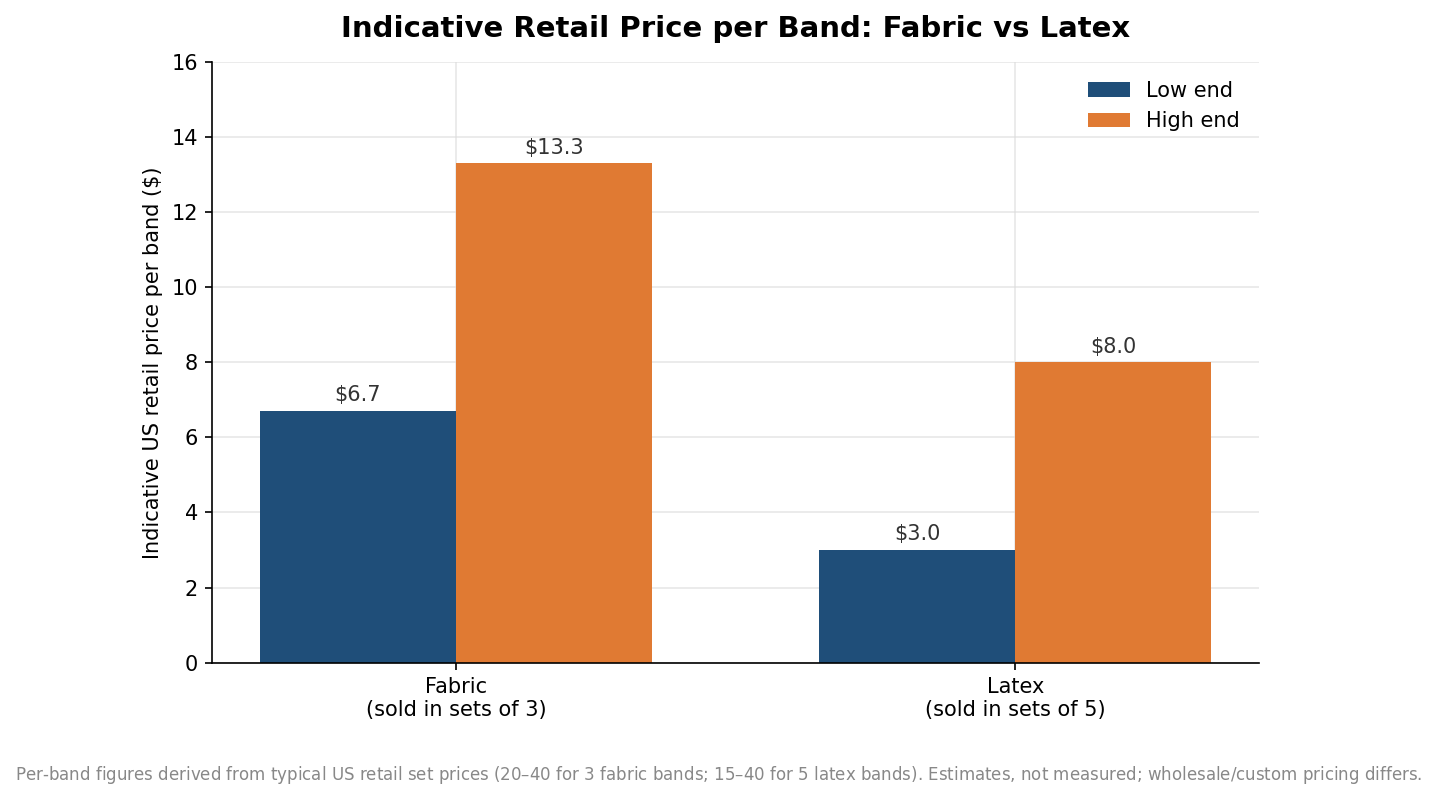
Latex is the cheaper material and it shows up at retail. A set of five latex loops commonly sells for somewhere between 15 and 40 dollars, while a set of three fabric bands lands in a similar total range, which works out to a higher price per band because you get fewer of them. The chart below translates those typical retail set prices into a rough per-band figure. Treat these as indicative retail numbers, not a quote; wholesale and custom-decorated pricing depends on quantity, decoration method, and size.
Durability cuts both ways. Fabric bands resist tearing and will not snap, but under heavy repeated load the elastic can gradually stretch out and lose some snap over months of hard use. Latex will hold its resistance longer if it stays intact, but it is vulnerable to abrasion; drag it across a rough gym floor or a concrete surface and it can nick and eventually fail at the nick. For a product that lives in gym bags and gets used on turf and rubber flooring, fabric’s floor tolerance is usually the safer bet, which matters when your brand is on the band and a failure reflects on you.
How to spec your order
Start from the customer, not the catalog. If you are outfitting a glute-focused studio or selling to lifters who care about the band staying above the knee, order wide fabric bands with silicone grip, in the 15-inch standard plus a 17-inch option, in two or three resistance levels, and put your logo on with screen print or a woven label. If you are making a giveaway or a promotional add-on where unit cost dominates and the mark can be subtle, a set of latex loops with a debossed logo will stretch your budget further.
Whichever way you go, lock down three things before you approve a sample: the exact loop circumference and width, the decoration method and how it holds up when the band is stretched, and the resistance levels defined against a pull you have actually measured rather than a marketing label. Custom fabric bands are frequently produced at minimums in the low hundreds of units with lead times of a few weeks plus freight, so a single approved pre-production sample is worth the extra week it costs. Get those details right and the band becomes a piece of equipment people keep in their bag, carrying your name to the gym several times a week.