The whole point of a custom booty band is the logo on it, and the method used to put that logo on a stretchy fabric band decides far more than most buyers expect. The same artwork can end up full-color and smooth, or two-tone and grippy, or woven into the weave itself, and each of those routes changes the color range you can use, how the band feels, whether the print adds grip or just sits there, how it survives the wash, and how many pieces you have to order to make it economical. Three methods do almost all of this work on fabric bands, and choosing between them is really a sequence of three questions.
Question one: how much color does the logo need
Start with the artwork, because color capability is where the methods separate most sharply. Dye sublimation prints full-color, photographic artwork with gradients and fine detail at no extra cost per color. Silicone printing and screen printing lay down spot colors, typically a small handful, and reproduce solid shapes and text far better than they reproduce a photo or a blend. Woven jacquard does not print at all; the logo is formed from colored threads in the weave, which limits you to a modest palette of thread colors. The chart lays the range out.
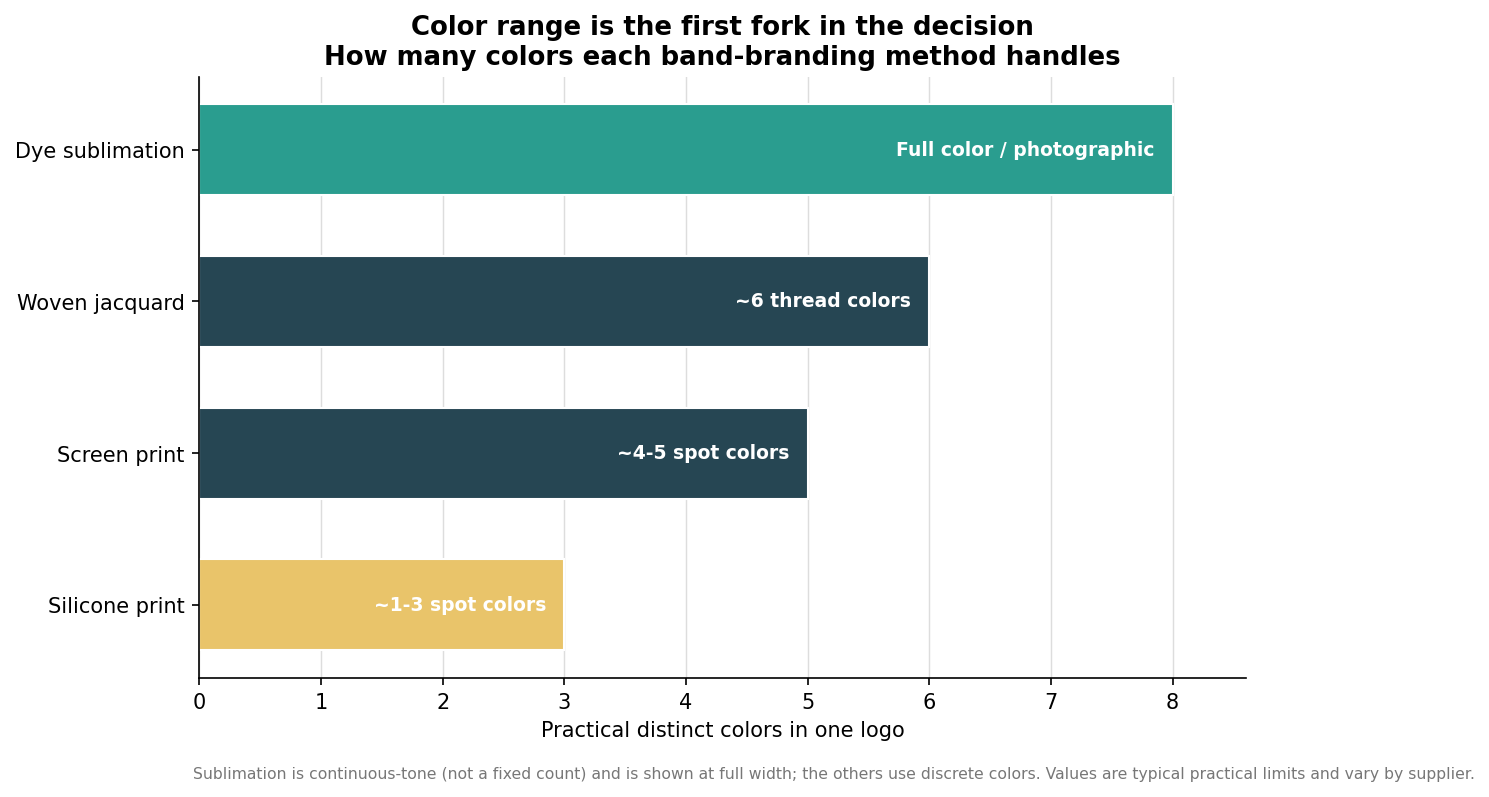
Let the logo pick the lane. A detailed, multicolor, or gradient mark points to sublimation, because forcing it into three spot colors means redrawing it. A clean one- or two-color wordmark or icon is a perfect fit for silicone or screen, and often looks more premium as a solid, tactile print than as a photographic one. A heritage or retail brand that wants its logo to read as part of the fabric, not a layer on it, is the case for jacquard. There is no universally best method here, only the best match for the specific artwork.
Question two: how should it feel and how long should it last
How the decoration sits on the band determines both its hand and its lifespan, and this is where booty bands differ from a T-shirt. Sublimation dyes the fiber itself, so the color becomes part of the fabric, stays perfectly smooth, and will not crack, peel, or fade through repeated washing, but because it is smooth it adds no grip. Silicone printing sits up as a raised, rubbery layer that is cured onto the band at roughly 120 to 150 degrees Celsius; it stretches with the band, holds up well, and adds real slip resistance, which on a hip band is a feature rather than a side effect because it helps the band bite instead of rolling. Woven jacquard is the most durable of all because the design is structural thread rather than anything applied on top, with a textured, high-end look, though it trades away color range and fine detail to get there. Ordinary screen print, the fourth option, sits on the surface like silicone but without the same elasticity, so on a band that stretches hard it is the most likely to crack over time, which is why it is the least common choice for this product.
Question three: how many are you ordering
Minimum order quantity is the practical constraint that often makes the decision, because the setup economics differ by method. Sublimation carries little fixed setup, so it supports the smallest runs and suits a new line testing a full-color design. Silicone and screen printing sit in the middle, needing screens or films that reward a few hundred pieces. Woven jacquard carries the cost of warping a loom for your specific design, which is why its minimums run highest and its value shows up only at volume. The indicative starting points below show the pattern, though they are typical ranges rather than quotes.
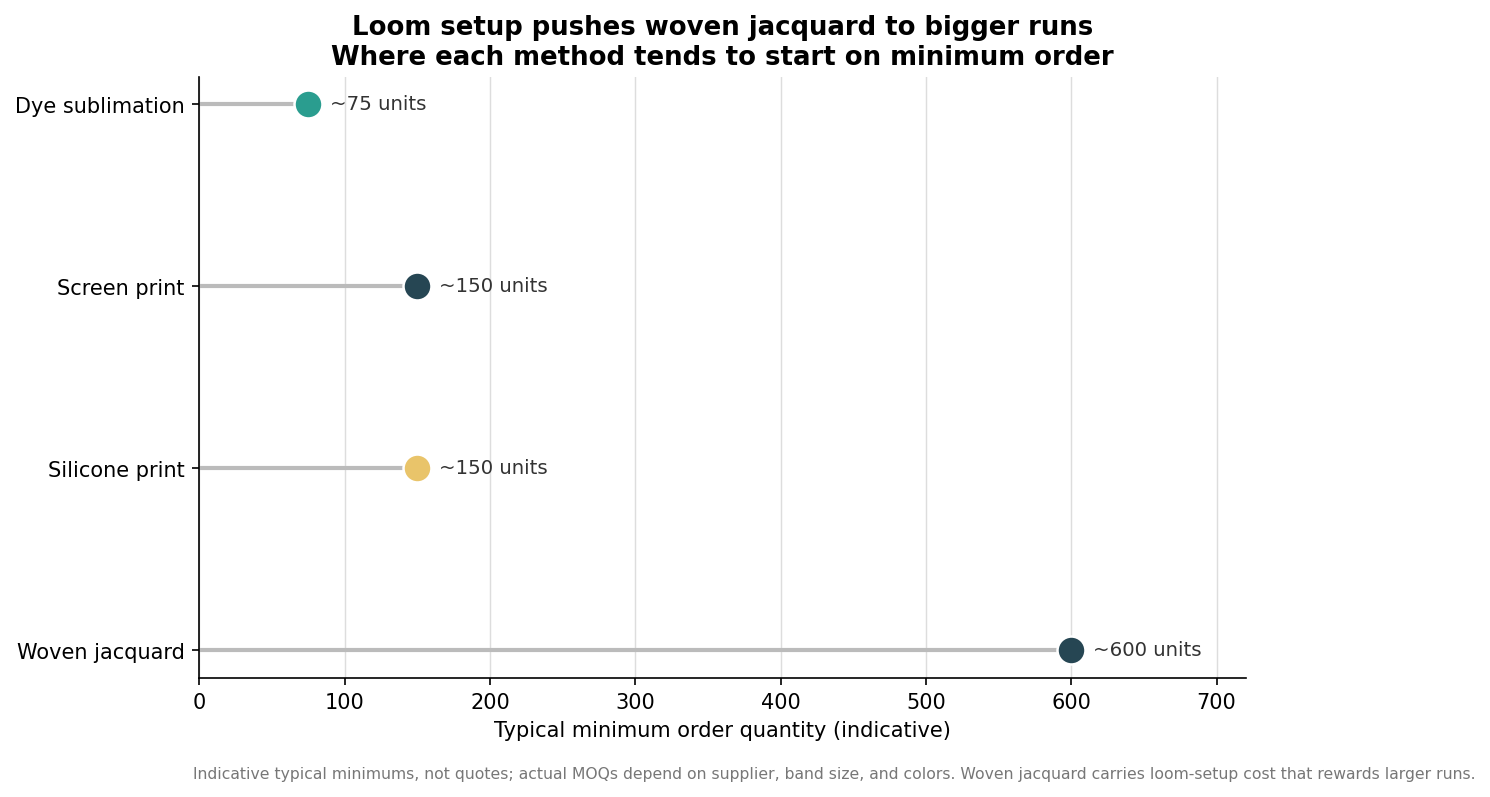
Read those numbers as tendencies, not promises. A new brand ordering its first hundred bands in a photographic design is naturally pushed toward sublimation, while an established gym chain reordering thousands of a simple two-color band can justify the loom setup for jacquard or the screens for silicone and get a lower per-unit price at that scale. The order size and the artwork usually point at the same answer once you lay them side by side.
Matching the method to how a booty band is used
The last filter is the product’s job. A booty band is worn against skin or leggings, stretched hard, and expected not to roll, so the decoration interacts with performance in a way a flat garment print does not. That is what makes silicone the workhorse for this category: a silicone logo or a band of silicone dots doubles as an anti-roll grip while carrying the brand, so the branding earns its keep twice. Sublimation is the choice when the visual identity is a full-color allover pattern and grip is handled separately, but remember it needs a polyester or poly-coated band and reads most accurately on lighter base colors, since it cannot print white or lighten a dark fabric. Jacquard suits a premium retail line where a woven-in logo signals quality and the order volume supports it. Fabric-versus-latex construction and resistance rating are separate decisions, but the branding method should be chosen with the band’s stretch and grip in mind, not treated as an afterthought.
For buyers writing the spec, the sequence is what matters: match the method to the logo’s color needs first, then to the feel and durability you want, then to the quantity you can commit to. Full-color and low volume lean sublimation; solid-color with grip leans silicone; woven-in premium at scale leans jacquard. Custom printed bands commonly start in the low hundreds, land in the low single dollars per unit depending on method, size, and colors, and ship within roughly two to four weeks after art approval, though those figures are indicative and vary by supplier and decoration route. Decide the branding method deliberately and it reinforces the product; leave it to default and it can quietly undercut both the look and the grip.