How to Wash, Store and Care for Custom Booty Bands So the Logo Lasts
Custom booty bands last longest when fabric bands are hand washed in cool water, air dried flat and stored away from heat, while latex loops are wiped down and kept out of sunlight. Custom Booty Bands builds both styles for gyms, trainers and fitness brands, and the right care routine keeps your logo crisp and the resistance consistent for many months of sessions.
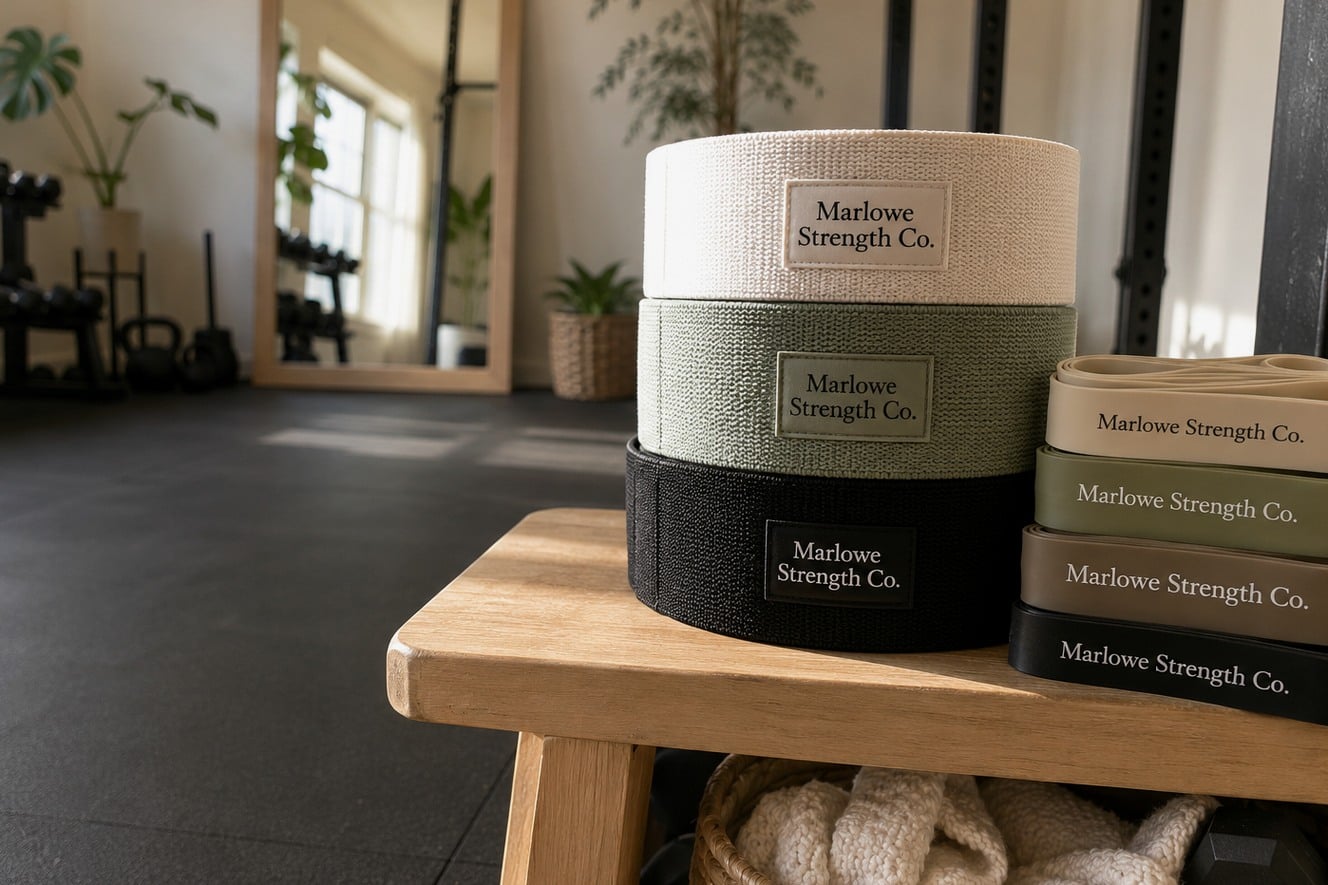
- Fabric booty bands: hand wash in cool water with mild soap, then air dry flat
- Latex loop bands: wipe clean, dry fully and store out of direct sunlight
- Heat from dryers, radiators and hot cars is the main enemy of both styles
- Retire a band when it frays, loses grip or no longer snaps back
- Reorders start at a minimum of 12 with a free mockup within 24 hours
What are custom booty bands made of, and why does that change the care routine?
Custom booty bands come in two main constructions, and each one needs a different care routine. Fabric booty bands are woven from a stretch textile with elastic strands running through the weave and usually a rubberized grip strip on the inside. Latex loop bands are a single continuous loop of rubber with the logo printed on the surface.
That difference matters because water, soap and heat affect textiles and rubber in opposite ways. A fabric band tolerates a gentle wash but can lose its snap if the elastic core is cooked in a dryer. A latex loop barely needs washing at all, but sunlight, skin oils and heat slowly break down the rubber until it turns tacky or cracks.
If your gym, studio or brand stocks both styles, treat them as two separate inventories with two separate cleaning habits. The rest of this guide covers each one, plus storage, logo durability and the signs that a band has reached the end of its working life.
How do you wash fabric booty bands without ruining the logo?
Fabric booty bands should be hand washed in cool water with a small amount of mild detergent, rinsed thoroughly and laid flat to air dry. That routine removes sweat and odor while protecting both the elastic core and the decorated logo area.
- Turn the band inside out if the logo is on the outer face, so rubbing during washing hits the plain side first.
- Soak in cool water with a gentle, bleach-free detergent for a few minutes to loosen sweat and chalk.
- Work the fabric gently with your hands. Avoid scrubbing brushes on the grip strip or the logo.
- Rinse until the water runs clear, because leftover soap attracts dirt and can leave the grip strip slippery.
- Press out water with a towel instead of wringing, which stretches the elastic unevenly.
- Air dry flat in a shaded, ventilated spot, never in a dryer or on a heater.
If you must use a machine, put the bands in a mesh laundry bag on a cold, delicate cycle and still skip the dryer. Fabric softener is best avoided, since it coats the grip strip and makes bands more likely to roll or slide during squats and hip thrusts.
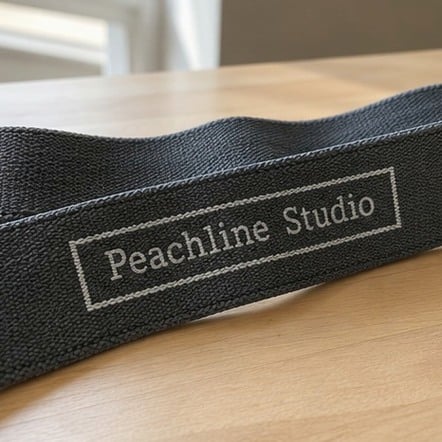
How should latex loop bands and resistance tubes be cleaned and stored?
Latex loop bands and resistance tube sets only need a wipe with a damp cloth and a drop of mild soap, followed by a full air dry before storage. Soaking, harsh solvents and alcohol-heavy cleaners dry out rubber and can lift a printed logo from the surface.
After cleaning, a light dusting of talc-free powder or cornstarch on latex loops helps prevent the band from sticking to itself in a bin. For tube sets, check the handles and connection points while you wipe them down, since that is where wear tends to show first.
Storage is where most latex damage actually happens. Ultraviolet light and heat break down rubber, so keep latex loops and tubes away from windows, car trunks, saunas and radiators. A closed drawer, a lidded bin or the pouch from a booty band 3-pack all work well. Never store latex loops stretched over a rack or doorframe, because constant tension shortens their working life.
Which logo methods hold up best to sweat, washing and daily use?
Every decoration method that Custom Booty Bands offers is chosen to survive normal training use, but each one responds a little differently to washing and abrasion. Knowing how your logo was applied tells you how gently to treat it.
| Logo method | Typical band | How it wears | Care tip |
|---|---|---|---|
| Dye sublimation | Fabric booty bands | Ink is part of the fibers, so it does not peel or crack | Avoid bleach and strong stain removers that can dull color |
| Silicone print | Fabric booty bands | Raised print adds grip; edges can lift if heated | Never tumble dry or iron over the logo |
| Woven jacquard | Fabric booty bands | Logo is woven into the band and very hard to wear off | Wash gently to avoid pulling loose threads |
| Surface print | Latex loops and tubes | Ink sits on the rubber and can scuff under friction | Wipe, do not scrub, and avoid solvent cleaners |
If your bands will be washed constantly, such as a shared studio set, mention that on your quote request. The team can recommend the logo method that best fits that level of laundering before the free mockup is sent.
How should a gym or studio store a shared set of booty bands?
A shared set of booty bands stays cleaner and lasts longer when every band has a dedicated home, is grouped by resistance and is wiped down between users. The goal is to stop bands from piling up damp in a corner, where odor and rubber breakdown start.
- Hang fabric bands loosely on wide hooks or pegs so air reaches both sides, without stretching them.
- Keep latex loops in lidded bins sorted by color or resistance level, away from windows.
- Set up a wipe-down station next to the band storage with a gentle cleaner and towels.
- Rotate the stock so the same few bands are not used in every class while others sit untouched.
- Schedule a weekly wash for fabric bands that see heavy class use.
Color-coding by resistance is also a care tool. When light, medium and heavy bands are visibly different, members grab the right one instead of overstretching a light band during heavy glute work. If you are still deciding how many bands a floor needs, the guide on how many custom booty bands to order for your gym covers spares and rotation.
When should you retire a booty band and reorder?
A booty band should be retired when it no longer returns to its original shape, when the fabric frays at the seam, when the grip strip peels or when latex shows cracks, stickiness or thin spots. Worn bands deliver inconsistent resistance and can snap, so replacing them is a safety step as well as a branding one.
Run a quick inspection whenever you wash or wipe your bands:
- Stretch each band gently and look along the seam and edges for loose threads.
- Check that the grip strip still lies flat and holds against skin or leggings.
- Bend latex loops and look for tiny surface cracks or a chalky, faded texture.
- Compare an older band with a newer one of the same level. If the older one feels clearly easier, it has lost tension.
Reordering is simple once the first run is approved. Custom Booty Bands keeps the minimum at 12 bands, returns a free mockup within 24 hours and ships standard orders in about 2 weeks, so it is easy to top up a single resistance level instead of replacing a whole set. The how it works page walks through each step.
Should you include care instructions with branded bands you sell or gift?
Yes. If you sell custom booty bands as merchandise or hand them out as gifts, a short care note protects the logo your customers carry around and cuts down on complaints about bands that lost their snap after a trip through the dryer.
Keep the note to a few plain lines: hand wash cool, air dry flat, no bleach, store out of sunlight. Fitness brands and creators launching a line often add the same lines to the product page, the packing slip and a small card inside the pouch of a band set. Corporate wellness programs can tuck a care card into each kit alongside the bands.
When you request a quote, mention that you want room for care instructions on an insert or pouch. Custom Booty Bands can talk through packaging options alongside your mockup, and you pay nothing until you approve the design. Unlimited free revisions mean you can adjust the wording until it fits your brand voice.
Frequently asked questions
Can fabric booty bands go in a washing machine?
Fabric booty bands can go in a washing machine if you place them in a mesh laundry bag and use a cold, delicate cycle with mild detergent. Hand washing is still gentler on the elastic core and the logo. Skip fabric softener, which coats the grip strip, and always air dry the bands flat rather than putting them in a dryer.
Why should custom booty bands never go in the dryer?
Custom booty bands should stay out of the dryer because heat weakens the elastic strands inside fabric bands and can lift raised silicone logos at the edges. A band that has been tumble dried often feels looser and rolls more during squats. Laying bands flat in a shaded, ventilated spot dries them fully overnight without any of that damage.
How do you get sweat odor out of fabric booty bands?
Fabric booty bands lose sweat odor best with a cool soak in water and mild detergent, followed by a thorough rinse and a full air dry. Odor usually comes from bands stored damp in a gym bag, so drying them completely after every wash and every hard session matters as much as the wash itself. Avoid bleach, which can fade printed logos.
Why is my latex loop band getting sticky?
A latex loop band turns sticky when the rubber starts breaking down, usually from heat, sunlight, skin oils or harsh cleaners. Wiping the band with mild soapy water and a light dusting of powder can help for a while, but stickiness is a sign of aging. Custom Booty Bands recommends replacing sticky latex loops, since weakened rubber can snap.
Will washing fade a sublimated logo on booty bands?
Sublimated logos on booty bands hold up well to washing because the ink becomes part of the fibers instead of sitting on top. Cool water and bleach-free detergent keep colors bright for a long time. Strong stain removers, bleach and hot water are what dull sublimation, so Custom Booty Bands suggests a gentle routine for any band that is laundered often.
Can I use disinfecting wipes on shared gym booty bands?
Shared gym booty bands can be wiped between users, but choose a gentle cleaner over alcohol-heavy or solvent-based wipes. Strong chemicals dry out latex and can scuff printed logos on rubber. For fabric bands, a regular wash routine does more for hygiene than wipes alone. Let every band dry fully before it goes back on the hook or into the bin.
How can I tell when a booty band has lost its resistance?
A booty band has lost resistance when it feels clearly easier than a newer band of the same level, no longer snaps back to its original shape, or rolls and slides during exercises it used to hold through. Fraying seams and peeling grip strips usually appear at the same time. Comparing old and new bands side by side is the quickest test.
What is the best way to store booty bands at home or in a studio?
Booty bands store best in a cool, dry, shaded place where air can reach them and nothing keeps them stretched. Fabric bands can hang loosely on wide hooks, while latex loops belong in a lidded bin or pouch. Keep every band away from windows, radiators and hot cars, since heat and sunlight are the main causes of early wear.
Do resistance tube sets need different care than booty bands?
Resistance tube sets need similar care to latex booty bands: a wipe with mild soapy water, a full air dry and storage out of sunlight. The extra step is checking handles, clips and connection points each time, since those areas take the most strain. Custom Booty Bands offers branded tube sets alongside fabric and latex booty bands for mixed training programs.
How do I reorder matching custom booty bands when old ones wear out?
Custom booty bands are easy to reorder because the approved design is already on file. Send a quote request naming the style, colors and resistance levels you need, and Custom Booty Bands confirms the details with a free mockup within 24 hours. The minimum is 12 bands, so topping up one worn resistance level is practical. Standard turnaround is about 2 weeks.
Can I add care instructions to a custom booty band set?
Custom booty band sets can ship with care instructions when you plan for them at the quote stage. Mention that you want a care card or printed wording on the pouch, and Custom Booty Bands will talk through options with your mockup. Keep the wording short: hand wash cool, air dry flat, no bleach and store out of direct sunlight.
Get a free mockup for your booty bands
Send your logo or idea and the quantity you have in mind. Custom Booty Bands returns a free mockup within 24 hours, you approve the design before anything is produced, and standard turnaround is about two weeks with faster options available. Get a custom quote.