Category: Buying Guides

  • How to Prepare Logo Artwork for Custom Booty Bands: Files, Colors, Placement and Mockup Approval

    How to Prepare Logo Artwork for Custom Booty Bands: Files, Colors, Placement and Mockup Approval

    How to Prepare Logo Artwork for Custom Booty Bands: Files, Colors, Placement and Mockup Approval

    Published October 26, 2026. Last updated October 26, 2026.

    Custom booty bands print best from a clean vector logo, a short list of brand colors, and a design sized for a narrow, stretchy band. Custom Booty Bands turns whatever you send into a free mockup within 24 hours, so your job is simply to supply usable artwork, decide placement and wording, and review the proof carefully before approving production.
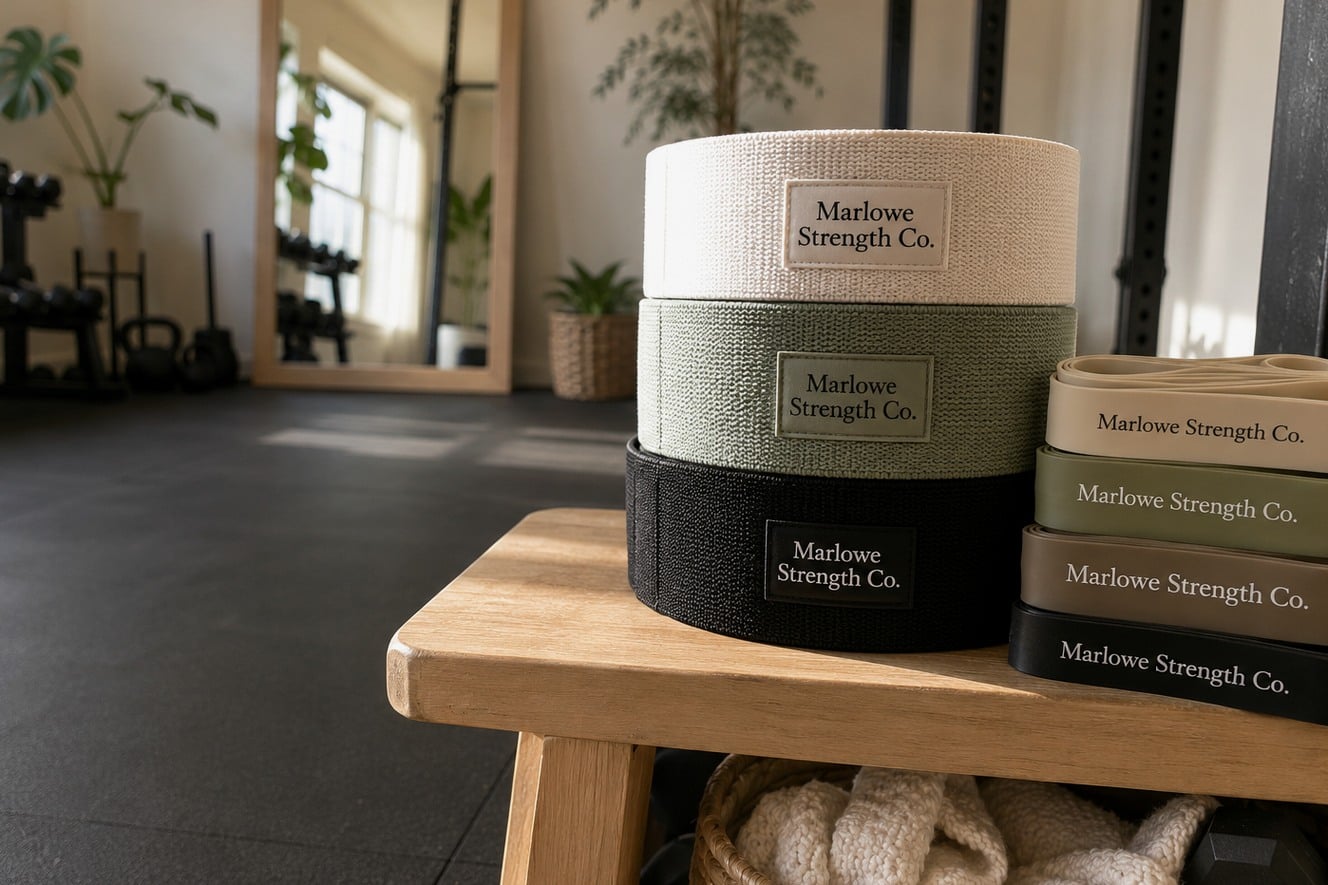
    How to Prepare Logo Artwork for Custom Booty Bands: Files, Colors, Placement and Mockup Approval - custom printed booty bands from Custom Booty Bands
    Custom booty bands with a logo, produced by Custom Booty Bands.
    Key facts
    • Vector files (AI, EPS, SVG or a vector PDF) give the sharpest print on booty bands
    • A free mockup arrives within 24 hours, with unlimited free revisions
    • You pay nothing until you approve the design
    • Minimum order is 12 bands, with standard turnaround of about 2 weeks after approval

    What logo file should I send for custom booty bands?

    The best file for custom booty bands is a vector logo: an AI, EPS, SVG or a PDF exported from design software with the artwork still as shapes rather than a flattened picture. Vector art scales to the long, narrow print area of a band without blurring, and the color separations stay clean for silicone and woven methods.

    If all you have is a PNG or JPG, send the largest version you can find. A logo saved off a website or pulled from a social profile is usually too small and soft. Custom Booty Bands can often redraw simple marks during the mockup stage, but a crisp original always produces a better result on fabric.

    • Best: vector AI, EPS, SVG or vector PDF with fonts converted to outlines
    • Workable: a large PNG with a transparent background
    • Avoid: screenshots, photos of a printed sign, or a logo pasted into a document

    Whichever format you send, include every version of the logo you use: the full lockup, a stacked version and an icon on its own. Having all of them lets the mockup try the option that actually reads best on a band.

    How does a logo fit on the narrow print area of a booty band?

    A booty band is a long, short-height loop, so horizontal logos and short wordmarks fit it most naturally. A tall or stacked logo has to shrink until it fits the band’s height, which can leave thin lines and small text too tiny to read once the band is stretched around a thigh.

    Most buyers choose one of three layouts. A single centered logo is clean and works on every band type. A repeating pattern of the logo or name around the full loop reads from any angle on a gym floor. A logo on one side with a website or social handle on the other gives retail bands a little more brand story.

    LayoutBest forWatch out for
    Single centered logoGym class sets, client giftsStacked logos shrinking too small
    Repeating logo or nameFabric bands sold at retail, team gearBusy patterns on darker band colors
    Logo plus handle or URLInfluencer and brand launchesLong text that crowds the logo
    Logo plus resistance labelShared class bands and setsLabels that compete with the logo

    If you are unsure, ask for two layouts on the same mockup. Seeing them side by side on your actual band color makes the decision quick.
    Fabric Booty Bands — Custom Woven & Printed - one of the custom booty bands styles from Custom Booty Bands
    Fabric Booty Bands — Custom Woven & Printed.

    How do brand colors work on fabric and latex booty bands?

    Brand colors behave differently depending on the band material and the decoration method, so tell Custom Booty Bands your exact colors up front, ideally as Pantone references or hex codes from your brand guide. The mockup then shows how those colors sit against the band itself.

    On fabric booty bands, sublimation can carry full-color and gradient artwork, while silicone printing and woven jacquard work best with a few solid colors. Woven logos are built from thread, so fine detail and subtle color blends simplify. On latex loop bands, the band color is usually part of the resistance system, so your logo color needs to contrast with each band in the set.

    • Pick a logo color that reads on every band shade in your set, or ask for a light and a dark version.
    • Expect screen colors to look slightly different from printed or woven color.
    • Avoid placing pale yellow, light gray or thin white lines on light bands.
    • Keep gradients for sublimated fabric; flatten them for silicone or woven.

    When contrast is a concern, a single-color knockout of your logo is often the most legible choice on a moving band.

    What text should go on custom booty bands besides the logo?

    The most useful extra text on custom booty bands is the resistance level, such as light, medium and heavy, followed by a short brand line like a website, social handle or tagline. Anything beyond that tends to crowd the band and shrink your logo.

    Resistance labels matter most for shared bands in classes and clinics, where people grab a band quickly and need to know which one they are holding. For retail and influencer launches, a handle on the band turns every workout photo into a small advertisement. For gyms and studios, a short location or class name can work well, as long as it stays readable.

    1. Write out every word exactly as it should appear, including capitalization.
    2. Decide which text goes on every band and which changes per band in a set.
    3. Keep each phrase short enough to read at a glance.
    4. Check spelling of handles and URLs twice, since one wrong character breaks them.

    If different bands in the same order need different labels, list them clearly in your request. Resistance wording and band colors can vary within a single run, and the mockup will show each version.

    Can I order custom booty bands if my logo is not finished?

    Yes, you can start a custom booty bands order before your logo is final, but production should not begin until the artwork is locked. Custom Booty Bands can build a mockup from a draft, a sketch or simply your business name in a clean typeface, which helps you see how the band looks while your branding settles.

    Because you pay nothing until you approve the design, there is no risk in requesting a mockup early. Many new studios and brands use that first proof to test ideas: a name-only version, an icon version and a version with a tagline. The comparison often shows which direction is strongest on a band before money is spent on full brand work.

    When the final logo arrives, send it as a vector file and ask for the mockup to be updated. Unlimited free revisions mean the switch costs nothing but a short wait. Just make sure everyone who signs off on brand decisions sees the final proof, not an early draft, before you approve.

    How should I review a booty band mockup before approving it?

    Review a booty band mockup by checking spelling, colors, placement, band type and resistance labels one item at a time, then approving only when every detail matches what you want printed. The mockup is the instruction production follows, so anything approved there will appear on every band.

    Look at the proof on a phone as well as a computer. A logo that looks fine on a large screen can turn out too small at true band scale. Confirm the band style matches your order, whether fabric, latex or a booty band 3-pack with a branded pouch, and that each band in a set shows the right label.

    • Read every word aloud, including handles and URLs.
    • Compare logo colors against your brand guide.
    • Check that the logo is not too close to a seam or edge.
    • Confirm quantities for each color and resistance.
    • Ask for a revision on anything uncertain rather than approving and hoping.

    After approval, standard turnaround is about 2 weeks, with faster delivery available through express shipping. A careful review at this stage is the single best way to make sure the bands that arrive are exactly the bands you pictured.

    Do pouches and packaging need separate artwork?

    Pouches and packaging for custom booty bands can use the same logo as the bands, but they usually deserve their own layout. A pouch has a larger, flatter print area than a band, so it can carry a stacked logo, a tagline or a short care note that would never fit on the loop itself.

    If you are ordering sets, think of the pouch as the front of the product. A retail customer sees the pouch before the bands, so it is the place for your full brand mark. The bands can then carry a simpler mark, such as an icon or wordmark, plus the resistance label. Our comparison of booty band 3-packs and single bands covers when a pouch is worth adding at all.

    Send pouch artwork with your band artwork in the same request, and ask for both in the mockup. Seeing the full set together makes it easier to keep colors and style consistent.

    Frequently asked questions

    Can a woven jacquard booty band reproduce a detailed logo?

    Woven jacquard booty bands reproduce bold shapes and solid colors well, but very fine lines, tiny text and soft gradients simplify because the logo is built from thread. Custom Booty Bands will show a simplified version on the free mockup so you can see the result before approving. If your logo is highly detailed, sublimation on fabric bands usually keeps more of the original artwork.

    Should I send Pantone codes with my booty band artwork?

    Pantone codes are the most reliable way to communicate brand color for custom booty bands, especially for silicone printing and woven logos. Hex or RGB values from a brand guide also help. Without a reference, colors are matched from your file, and screen color can shift. Including codes in your quote request lets the mockup aim for your exact shades from the start.

    Can the logo wrap all the way around a booty band?

    A repeating logo can run around the full loop of many booty bands, particularly fabric bands decorated with sublimation. The repeat means your brand shows from any angle during a workout or in a photo. Custom Booty Bands can show a full-wrap layout next to a single centered logo on your mockup, so you can compare the two before choosing.

    Will a white logo show up on a light-colored booty band?

    A white logo on a light-colored booty band usually disappears, especially once the band stretches and the fabric texture shows through. Choose a darker logo color for light bands, or order darker band colors for a white mark. The free mockup from Custom Booty Bands shows the actual contrast, which makes it easy to catch legibility problems before production starts.

    Can each resistance level in a booty band order use a different logo color?

    Logo color can change by resistance level in a single booty band order, which helps when each band in a set is a different shade. A dark logo on light bands and a light logo on dark bands keeps every band readable. List the color for each band in your request, and the mockup will show every version side by side for approval.

    Do fonts need to be outlined in booty band artwork files?

    Fonts in booty band artwork should be converted to outlines, or the font files should be sent along with the design. Live text in a file can swap to a default typeface on another computer, which changes how your logo looks. Outlining locks the lettering in place, so the mockup and the finished bands match the type you actually chose.

    Can I put a QR code on custom booty bands?

    A QR code is rarely a good fit for custom booty bands, because the narrow, stretchy band distorts the pattern and many phones struggle to scan it. A short social handle or website is usually more practical. If you want a scannable code, place it on the pouch or packaging instead, where the surface is flat and large enough to work reliably.

    How many design changes can I request on a booty band mockup?

    Booty band mockups from Custom Booty Bands come with unlimited free revisions, so you can adjust colors, placement, wording or layout as many times as needed. The first mockup arrives within 24 hours, and each revision follows the same simple process. You pay nothing until you approve the final design, so there is no pressure to sign off early.

    Can booty bands in one order carry different logos?

    Booty band orders can sometimes carry more than one design, for example a gym logo on class bands and a sub-brand on retail bands. Each design needs its own artwork and its own approval on the mockup, so plan the split between versions early. Mention every design in your quote request so Custom Booty Bands can plan the mockups together.

    What should I do if my logo only exists as a low-resolution image?

    A low-resolution logo can still lead to good booty bands if it gets redrawn as vector art first. Send the clearest version you have and say it is the only copy. Simple marks can often be rebuilt during the mockup stage at Custom Booty Bands. Complex illustrations may need your original designer, so ask them for the source file if possible.

    Can a booty band mockup show the bands in my exact order colors?

    Booty band mockups are prepared on the band colors you choose, so you see your logo against the actual shades in your order rather than a generic template. If you are deciding between colors, ask for the design on two or three options in the same proof. Comparing them side by side makes color and contrast decisions far easier.

    Get a free mockup for your booty bands

    Send your logo or idea and the quantity you have in mind. Custom Booty Bands returns a free mockup within 24 hours, you approve the design before anything is produced, and standard turnaround is about two weeks with faster options available. Get a custom quote.
  • Custom Booty Band Order Mistakes: What Goes Wrong on a First Order and How to Avoid It

    Custom Booty Band Order Mistakes: What Goes Wrong on a First Order and How to Avoid It

    Custom Booty Band Order Mistakes: What Goes Wrong on a First Order and How to Avoid It

    Published October 21, 2026. Last updated October 21, 2026.

    The biggest custom booty band mistakes happen before production: choosing a material that does not fit the use, ordering unclear resistance levels, sending weak logo files, rushing the mockup and ordering too late. Custom Booty Bands catches most of these with a free mockup within 24 hours, but knowing them ahead of time makes a first order of booty bands smooth from the start.

    Custom Booty Band Order Mistakes: What Goes Wrong on a First Order and How to Avoid It - custom printed booty bands from Custom Booty Bands
    Custom booty bands with a logo, produced by Custom Booty Bands.
    Key facts
    • Decide who will use the bands, and how, before choosing a style
    • Give each resistance level a distinct color and a printed label
    • Free mockup within 24 hours with unlimited free revisions
    • Standard turnaround about 2 weeks after design approval
    • Minimum order is 12 bands, so test runs are realistic

    What is the most common mistake on a first custom booty band order?

    The most common mistake on a first custom booty band order is choosing the band before deciding how it will be used. A gym that wants shared class bands, a coach who wants take-home warm-up bands and an influencer who wants a retail product need different materials, packaging and resistance plans, even if the logo is the same.

    Buyers who skip this step usually order whatever looks best in a photo, then discover that latex loops roll up the thigh during a sweaty class, or that loose fabric bands look unfinished on a merch shelf. The fix is simple: write one sentence that names who will use the bands, where and how often, before you look at a single color.

    Custom Booty Bands asks about intended use on the quote form for exactly this reason, so the recommendation matches the job.

    Why do booty band resistance levels cause so many reorder problems?

    Booty band resistance levels cause reorder problems because first-time buyers often order a single resistance for everyone, or several levels that are hard to tell apart. A single level frustrates both beginners and strong clients, and look-alike colors mean nobody can grab the right band quickly in the middle of a class.

    A better plan is a light, medium and heavy band, each in a clearly different color, with the level printed on the band next to the logo. Pick a color order and keep it for every future run so returning members never have to relearn the system.

    Another quiet mistake is assuming that “heavy” means the same thing across suppliers. Fabric band resistance depends on weave, elastic content and width, so two bands with the same label can feel very different. When Custom Booty Bands sends your mockup, ask which resistance each color represents and keep that note with your order records. If you plan to stock bands for several programs, the guide to how many custom booty bands to order for a gym helps balance levels across a facility.

    Fabric Booty Bands — Custom Woven & Printed - one of the custom booty bands styles from Custom Booty Bands
    Fabric Booty Bands — Custom Woven & Printed.

    What logo file mistakes slow down a custom booty band order?

    The logo file mistakes that slow down a custom booty band order are low-resolution screenshots, logos with tiny text, and artwork that only works on a white background. A booty band is a narrow, stretchy surface, so artwork that looks fine on a website can turn blurry, crowded or invisible once it is printed or woven.

    • Screenshots and social media images: send the original vector or high-resolution file from whoever designed the logo.
    • Fine lines and small taglines: simplify the mark or drop the tagline so the main name reads clearly at a glance.
    • Wide, square or stacked logos: a long horizontal version usually fits a band far better than a stacked badge.
    • Too many colors: woven and silicone methods favor bold, simple color blocks over gradients.

    You do not need finished art to start. Custom Booty Bands returns a free mockup within 24 hours, and the design team can clean up a rough file or suggest a simpler band version of your logo. Unlimited free revisions mean you can try a horizontal layout and a stacked layout side by side before deciding.

    How does logo color contrast go wrong on booty bands?

    Logo color contrast goes wrong on booty bands when the logo color is too close to the band color, such as a navy logo on a black band or a pale pink logo on a blush band. On a screen those combinations can look subtle and stylish, but on a band across a client’s thighs in a dim studio they disappear.

    Contrast matters even more when the same logo has to sit on several band colors in a resistance set. A logo that pops on the light band may vanish on the dark heavy band. Plan for that from the start instead of discovering it after the bands arrive.

    Band colorLogo colors that tend to read wellLogo colors to avoid
    Black or charcoalWhite, bright brand colors, metallic tonesNavy, dark gray, deep purple
    Pastels and blushDark gray, black, deep brand colorsWhite, light pink, soft yellow
    Bright brand colorsWhite or blackSimilar shades of the same hue

    A simple fix is a one-color white or black version of your logo for dark and light bands. Ask Custom Booty Bands to show every band color in the mockup, not only your favorite.

    Should you approve a booty band mockup quickly or check it slowly?

    You should check a custom booty band mockup slowly, because the mockup is the last chance to catch a problem before production. Rushing approval to save a day often costs far more time later, since anything approved on the mockup is exactly what gets made.

    Read every word on the mockup out loud. Misspelled studio names, outdated social handles and old website addresses are the errors buyers most often wish they had caught. Then check the details that are easy to overlook:

    1. Every resistance level appears in the correct color and order.
    2. The logo is the right version, not an older file someone had saved.
    3. Any printed resistance labels match the band they sit on.
    4. Packaging, pouches or tags show the same branding as the bands.
    5. The quantity per color matches what you planned to stock.

    Custom Booty Bands lets you pay nothing until you approve the design, and revisions are free and unlimited, so there is no penalty for asking for one more change. Share the mockup with one other person on your team, because a second set of eyes catches what you have stopped seeing.

    How late is too late to order custom booty bands for an event or launch?

    Custom booty bands are too late to order when your event date leaves no room for mockup review, revisions and production. Standard turnaround at Custom Booty Bands is about 2 weeks after you approve the design, and faster turnaround is available with express shipping, but the clock only starts once the mockup is approved.

    The mistake first-time buyers make is counting from the day they submit the quote form rather than the day they approve artwork. If the logo needs a cleanup, the team debates colors, or the owner is traveling, approval can slip by several days without anyone noticing.

    Work backward instead. Pick the date the bands must be in hand, which should be a little before the event so you can unpack and count them. Subtract about 2 weeks for production and shipping, then leave time for at least one round of revisions. The mockup itself arrives within 24 hours, so the main delay is usually internal decision-making. Gyms planning a launch can see how this fits a presale calendar on the page for custom booty bands for gym grand openings.

    Why do buyers regret skipping packaging on retail booty bands?

    Buyers regret skipping packaging on retail booty bands because loose bands are hard to display, hard to price on a shelf and easy to lose in a bin. A fitness brand, influencer or gym pro shop selling bands needs them to look like a finished product, not like spare equipment from the class closet.

    Packaging also solves a practical problem for resistance sets. When three bands ship together in a branded pouch, the customer gets the full progression and the right colors stay together. That is why many sellers choose booty band 3-packs rather than single bands.

    On the other hand, packaging is unnecessary for shared studio bands that live on a hook or in a bin, so do not pay for pouches nobody will see. Decide packaging per use: class bands loose, retail and gift bands packed. Custom Booty Bands can quote both in one request, and the mockup can show the pouch alongside the bands so the branding matches.

    What reorder mistakes make a second batch of booty bands look different?

    The reorder mistake that makes a second batch of custom booty bands look different is failing to keep a record of the first order. Without the approved mockup, color names, resistance notes and logo file, a reorder becomes a fresh guess, and new bands sit next to old ones that do not quite match.

    Keep a small reorder file the day your bands arrive. Save the final approved mockup, the exact logo file used, the band colors for each resistance level and any packaging details. When you come back, send that file with the quote request and say you want a match to the earlier run.

    A second mistake is waiting until the last band is gone. Watch how fast bands wear out or sell, and reorder while you still have stock on hand. Because the minimum order is 12, smaller top-up runs are realistic, so you do not have to buy a year of inventory at once. For a full walkthrough of the ordering steps themselves, see how to order custom booty bands or the how it works page.

    Frequently asked questions

    Can I mix different band colors in a single custom booty band order?

    Custom booty band orders can usually include several band colors, which is how most buyers build a light, medium and heavy set. Ask how the minimum of 12 applies across colors before you split quantities, because the answer affects how many of each level you can stock. Custom Booty Bands shows every color in the free mockup so you can confirm the full set before approving.

    Is a stacked logo or a horizontal logo better on booty bands?

    Booty bands usually suit a horizontal logo better than a stacked or square badge, because the printable area is long and narrow. A stacked logo has to shrink to fit the band height, which makes small text hard to read. If your brand only has a stacked version, Custom Booty Bands can mock up a simplified horizontal layout within 24 hours for comparison.

    Should I put my website address on custom booty bands?

    Custom booty bands can carry a website or social handle, but only add one if it is short and unlikely to change. Long addresses crowd the band and make the main logo smaller. Many gyms choose the brand name alone on class bands and save the handle for retail pouches, where there is more space and the buyer is still deciding.

    What happens if I notice a typo after approving my booty band mockup?

    Booty band production follows the approved mockup exactly, so contact the team immediately if you spot a typo after approval. Whether a change is still possible depends on how far production has moved. The safer habit is reading every word aloud before approving, since Custom Booty Bands offers unlimited free revisions and you pay nothing until the design is approved.

    Can I order booty bands before my brand colors are final?

    Ordering custom booty bands before your brand colors are final is a common first-order mistake, because a later color change leaves you with bands that no longer match signage or apparel. Request a free mockup to explore options, but wait to approve until the palette is settled. Custom Booty Bands keeps the mockup open for revisions as long as you need.

    How do I avoid ordering the wrong booty band size?

    Avoiding the wrong booty band size starts with knowing where the band will sit: thighs, knees or ankles. Bands for above-the-knee work generally need more length than ankle bands. Tell Custom Booty Bands who the users are and which exercises matter most, and the team will recommend sizing and resistance that fit the routine instead of a one-size guess.

    Should gym class booty bands and retail booty bands use the same design?

    Gym class booty bands and retail booty bands can share a logo, but the designs often differ in packaging, color range and labeling. Class bands benefit from bold resistance labels for quick grabbing, while retail bands may lean on a cleaner look and a branded pouch. Custom Booty Bands can quote both versions in one request so the branding stays consistent.

    Why should resistance be printed on custom booty bands?

    Printing resistance on custom booty bands prevents mix-ups when several people grab bands at once, especially in group classes or team warm-ups. Color alone works until someone is colorblind, the lighting is dim, or a reorder arrives in a slightly different shade. A short word like light, medium or heavy beside the logo keeps the system clear for every user.

    Is ordering only latex booty bands a mistake for a studio?

    Ordering only latex booty bands can be a mistake for a studio if any clients have latex sensitivity or if bands will be used over bare skin for long classes. Latex loops also tend to roll more than fabric bands. Many studios keep fabric booty bands for classes and use latex loops for giveaways, and Custom Booty Bands can quote both styles together.

    How many people should review a booty band mockup before approval?

    A booty band mockup should be reviewed by at least two people: the person placing the order and someone who knows the brand well, such as the owner or designer. A second reviewer catches outdated logos, wrong colors and misspellings that the buyer has stopped noticing. Custom Booty Bands sends the mockup within 24 hours, which leaves time to share it internally.

    Can a first booty band order be small enough to test the design?

    A first custom booty band order can be small enough to test the design, because the minimum is 12 bands. A small test run lets you check feel, color contrast and logo readability with real clients before committing to a larger batch. Custom Booty Bands keeps your approved artwork on file, so a later, larger order can match the test run closely.

    Get a free mockup for your booty bands

    Send your logo or idea and the quantity you have in mind. Custom Booty Bands returns a free mockup within 24 hours, you approve the design before anything is produced, and standard turnaround is about two weeks with faster options available. Get a custom quote.

  • Custom Booty Bands for Sports Teams: A Coach’s Warm-Up and Team Gear Playbook

    Custom Booty Bands for Sports Teams: A Coach’s Warm-Up and Team Gear Playbook

    Custom Booty Bands for Sports Teams: A Coach's Warm-Up and Team Gear Playbook

    Published October 12, 2026. Last updated October 12, 2026.

    Custom booty bands give sports teams a portable hip and glute warm-up that every athlete can carry, with the team logo printed right on the band. Custom Booty Bands helps coaches pick fabric or latex, set resistance levels for a roster, add names or numbers and get bands delivered before preseason, starting from a minimum of 12.

    Custom Booty Bands for Sports Teams: A Coach's Warm-Up and Team Gear Playbook - custom printed booty bands from Custom Booty Bands
    Custom booty bands with a logo, produced by Custom Booty Bands.
    Key facts
    • Fabric booty bands roll less during sideline lateral walks
    • Use three resistance levels with distinct colors for a whole roster
    • Minimum order is 12 bands
    • Free mockup within 24 hours, standard turnaround about 2 weeks

    Why do sports teams use custom booty bands for warm-ups?

    Sports teams use custom booty bands because a single loop around the thighs or ankles turns a generic warm-up into hip and glute activation that every athlete can do on a sideline, in a locker room or on a bus stop pad. The bands are light, they pack flat into an equipment bag, and they need no rack, anchor point or coach supervision once the routine is learned.

    Branding the bands adds something a bulk generic pack cannot: ownership. When every athlete carries a band with the team name and mascot, the bands come back after away games, they stop disappearing into other programs’ bags, and the warm-up looks like part of the team’s identity rather than borrowed gear.

    Custom Booty Bands prints team logos on fabric booty bands and latex loop bands, so a program can match the style to how the bands will actually be used. Soccer, softball, volleyball, track, basketball, lacrosse and dance teams all lean on lateral walks, monster walks, clamshells and glute bridges, and those drills are exactly what booty bands are built for.

    Which booty band style works best for a team: fabric or latex?

    For most teams, fabric booty bands are the better default because they stay put over leggings, shorts and bare skin without rolling, and they survive being stuffed into bags week after week. Latex loop bands make sense when a program wants a lighter, cheaper-feeling handout for youth camps or a large roster where every athlete takes one home.

    Team needFabric booty bandsLatex loop bands
    Sideline activation before gamesStrong fit: no rolling during lateral walksWorks, but can roll up the thigh
    Take-home band for every athleteGood for varsity and club teamsGood for camps and youth leagues
    Shared bands in the training roomWashable, holds up to heavy useWipe clean, replace more often
    Logo visibilityLarge print area on a wide bandSmaller print area on a thin loop
    Latex sensitivity on the rosterAsk about latex-free fabric optionsNot suitable

    Many athletic programs order both: a fabric set for the team and a latex loop handout for camps, booster events or fundraisers. If you want the deeper material breakdown, the site’s guide on fabric vs. latex booty bands covers construction and feel in detail.

    Fabric Booty Bands — Custom Woven & Printed - one of the custom booty bands styles from Custom Booty Bands
    Fabric Booty Bands — Custom Woven & Printed.

    How should a coach choose resistance levels for a whole roster?

    A coach should choose resistance by role rather than by athlete: one lighter band for activation and rehab-style work, one medium band for most warm-ups, and one heavier band for strength sessions. That three-level approach covers a full roster without guessing at each player’s strength, and it maps neatly onto a booty band 3-pack.

    Color coding matters more on a team than in a home gym. When a strength coach calls out “grab the heavy band,” twenty athletes need to find it in seconds, so each resistance level should be a clearly different color with the level printed on the band next to the logo. Keep the color order consistent across reorders so freshmen next season learn the same system.

    • Light: activation, mobility work and athletes returning from a layoff
    • Medium: standard pre-game and pre-practice warm-up
    • Heavy: strength days, glute bridges and loaded hip work

    If your athletic trainer works with injured athletes, coordinate with them before ordering. Some programs add a separate rehab set, and the site’s page on resistance bands for physical therapy explains how clinics spec lighter bands.

    Can each athlete's name or number go on a custom booty band?

    Yes, team programs can often personalize booty bands with names or jersey numbers, but the details depend on the decoration method and the band style, so ask for it at the quote stage. Personalized bands are popular for senior night, championship runs and travel teams, because an athlete who sees their own name on the band keeps track of it.

    A simpler approach that still solves the lost-band problem is a shared team design with a blank area left for a marker, or a team set where each position group gets its own color. Whichever route you pick, send the full roster list as a spreadsheet with names spelled exactly as they should print, and check every name on the mockup before approving.

    Custom Booty Bands sends a free mockup within 24 hours of receiving your artwork, with unlimited free revisions, and you pay nothing until you approve the design. That review window is where personalization errors get caught, so have a captain or team manager read the roster against the proof line by line.

    What logo file does a team need to send?

    A team should send its logo as a vector file, such as AI, EPS, PDF or SVG, because vector art stays sharp when it is scaled to the width of a booty band. A high-resolution PNG can work for simpler marks, but blurry screenshots of a jersey or a social media avatar usually need cleanup before they print well.

    Many school and club logos are detailed crests with small text, outlines and gradients. Those shapes often read poorly on a narrow band, so consider a simplified version: the mascot alone, a monogram or the team name in its official font. The mockup will show you how the mark actually reads at band size.

    • Include official team colors by name or swatch reference
    • Confirm whether school or league licensing rules apply to logo use
    • Tell the team which word or mark matters most if space is tight

    How many custom booty bands should a team order?

    Start with one band per athlete, or one 3-pack per athlete if every player needs all three resistance levels, then add spares for coaches, new players who join midseason and bands that get lost on the road. The minimum order at Custom Booty Bands is 12, which covers even a small roster or a coaching staff pilot.

    Programs with several teams, such as varsity, junior varsity and a youth feeder program, can usually combine them into one order with the same design. Splitting by level later is easy because the artwork is already approved. For detailed order math, see the guide on how many booty bands to order for a gym, which uses the same spare-planning logic.

    Order in time for preseason. Standard turnaround is about 2 weeks after mockup approval, with faster turnaround available through express shipping, so a team that approves artwork early in the summer has bands in hand before the first practice.

    Can teams sell custom booty bands as a fundraiser or in a team store?

    Yes, branded booty bands work well as a team store item or booster fundraiser because they are useful, small enough to ship or hand out, and appeal to parents and fans who train at home. A band with the mascot and season year becomes a keepsake that families actually use, unlike another pennant.

    For a fundraiser, a packaged 3-pack in a branded pouch looks more like a retail product than a loose band. Keep the design separate from the athletes’ team-issue bands, for example a different colorway or a “supporter” label, so player gear stays recognizable on the sideline. The site’s guide to booty band margins walks through how to think about resale without guessing at numbers.

    What should a team check before approving its booty band order?

    Before approving, a team should confirm the logo, colors, resistance labels, roster names and delivery date all match what the coaching staff expects. Most problems with team gear come from approvals rushed by one person, so share the mockup with the head coach, the strength coach and whoever manages the budget.

    1. Check spelling of the team name, mascot and every personalized name
    2. Confirm each resistance level has its own color and printed label
    3. Verify the band style and size suit your athletes, including youth sizing if needed
    4. Confirm the delivery address and the date of the first practice or game
    5. Ask about latex-free options if anyone on the roster has a latex sensitivity

    When everything checks out, approve the mockup and production starts. If you want the full ordering walkthrough, follow the 7-step ordering checklist or see how it works, then request a custom quote for your team.

    Frequently asked questions

    What warm-up drills do sports teams run with custom booty bands?

    Sports teams use custom booty bands for lateral band walks, monster walks, clamshells, glute bridges, banded squats and fire hydrants before practice and games. These drills wake up the hips and glutes that drive cutting, jumping and sprinting. A short routine of a few minutes fits on any sideline, and every athlete can do it at the same time with one band.

    Are fabric booty bands better than latex loops for youth sports camps?

    Fabric booty bands last longer and roll less, but latex loop bands are often the practical choice for youth sports camps where every camper takes a band home. Latex loops are lighter and simpler for one-time handouts. Custom Booty Bands prints logos on both styles, so camp directors can match the band to the budget and the age group.

    Can a school put its mascot on custom booty bands?

    A school can put its mascot on custom booty bands as long as it has permission to use that logo. Some schools and leagues have licensing rules for branded merchandise, so check with your athletic director first. Send the mascot as a vector file, and Custom Booty Bands will show how it reads on the band in a free mockup within 24 hours.

    How do coaches stop team booty bands from getting lost on road trips?

    Coaches keep team booty bands from getting lost by branding every band with the team name, assigning one band or set per athlete and checking bands in and out like other team equipment. Personalized names or jersey numbers help even more. A mesh bag per position group makes counting quick before the bus leaves an away game.

    Can one booty band order cover varsity, junior varsity and youth teams?

    One booty band order can usually cover varsity, junior varsity and youth teams when they share the same design. Different colors or resistance levels can be assigned to each level within the order. Custom Booty Bands confirms the split on the mockup, so the athletic department approves everything once instead of placing several small orders across the season.

    What resistance should a team give injured or returning athletes?

    Injured or returning athletes usually start on the lightest booty band in the team's set and move up only when the athletic trainer clears them. A light band supports activation and mobility work without loading a recovering joint too early. Coordinate with your trainer or physical therapist, and order a dedicated light band set if the program handles many returns.

    How far ahead of preseason should a team order custom booty bands?

    A team should order custom booty bands several weeks before preseason so there is time for artwork, approval and production. Custom Booty Bands returns a free mockup within 24 hours, and standard turnaround is about 2 weeks after approval. Faster turnaround is available with express shipping, but early approval avoids last-minute stress before the first practice.

    Do booster clubs buy custom booty bands for fundraisers?

    Booster clubs do buy custom booty bands for fundraisers because the bands are useful, affordable to ship and appealing to parents who work out at home. A branded 3-pack in a pouch feels like a real retail product. Custom Booty Bands can print a supporter design that stays visually separate from the athletes' own team-issue bands.

    Should team booty bands show the resistance level on the band?

    Team booty bands should show the resistance level printed on each band, along with a distinct color per level. When a coach calls out a band during a crowded warm-up, athletes need to grab the right one immediately. Custom Booty Bands can add light, medium and heavy labels beside the team logo so every set stays easy to sort.

    Can dance and cheer teams order custom booty bands in team colors?

    Dance and cheer teams can order custom booty bands in colors that match their uniforms, with the team name or squad logo printed on the band. These athletes use bands for hip strength, turnout support and stretching routines. Custom Booty Bands shows the colors and logo placement on a free mockup so coaches can confirm the match before production.

    What is the smallest booty band order a club team can place?

    The smallest booty band order a club team can place with Custom Booty Bands is 12 bands, which suits a small roster, a coaching staff or a trial before outfitting a whole program. Larger clubs often add spares for new players. You pay nothing until you approve the design, so a small club can review the mockup with no upfront risk.

    Get a free mockup for your booty bands

    Send your logo or idea and the quantity you have in mind. Custom Booty Bands returns a free mockup within 24 hours, you approve the design before anything is produced, and standard turnaround is about two weeks with faster options available. Get a custom quote.

  • How to Wash, Store and Care for Custom Booty Bands So the Logo Lasts

    How to Wash, Store and Care for Custom Booty Bands So the Logo Lasts

    How to Wash, Store and Care for Custom Booty Bands So the Logo Lasts

    Published October 5, 2026. Last updated October 5, 2026.

    Custom booty bands last longest when fabric bands are hand washed in cool water, air dried flat and stored away from heat, while latex loops are wiped down and kept out of sunlight. Custom Booty Bands builds both styles for gyms, trainers and fitness brands, and the right care routine keeps your logo crisp and the resistance consistent for many months of sessions.

    How to Wash, Store and Care for Custom Booty Bands So the Logo Lasts - custom printed booty bands from Custom Booty Bands
    Custom booty bands with a logo, produced by Custom Booty Bands.
    Key facts
    • Fabric booty bands: hand wash in cool water with mild soap, then air dry flat
    • Latex loop bands: wipe clean, dry fully and store out of direct sunlight
    • Heat from dryers, radiators and hot cars is the main enemy of both styles
    • Retire a band when it frays, loses grip or no longer snaps back
    • Reorders start at a minimum of 12 with a free mockup within 24 hours

    What are custom booty bands made of, and why does that change the care routine?

    Custom booty bands come in two main constructions, and each one needs a different care routine. Fabric booty bands are woven from a stretch textile with elastic strands running through the weave and usually a rubberized grip strip on the inside. Latex loop bands are a single continuous loop of rubber with the logo printed on the surface.

    That difference matters because water, soap and heat affect textiles and rubber in opposite ways. A fabric band tolerates a gentle wash but can lose its snap if the elastic core is cooked in a dryer. A latex loop barely needs washing at all, but sunlight, skin oils and heat slowly break down the rubber until it turns tacky or cracks.

    If your gym, studio or brand stocks both styles, treat them as two separate inventories with two separate cleaning habits. The rest of this guide covers each one, plus storage, logo durability and the signs that a band has reached the end of its working life.

    How do you wash fabric booty bands without ruining the logo?

    Fabric booty bands should be hand washed in cool water with a small amount of mild detergent, rinsed thoroughly and laid flat to air dry. That routine removes sweat and odor while protecting both the elastic core and the decorated logo area.

    1. Turn the band inside out if the logo is on the outer face, so rubbing during washing hits the plain side first.
    2. Soak in cool water with a gentle, bleach-free detergent for a few minutes to loosen sweat and chalk.
    3. Work the fabric gently with your hands. Avoid scrubbing brushes on the grip strip or the logo.
    4. Rinse until the water runs clear, because leftover soap attracts dirt and can leave the grip strip slippery.
    5. Press out water with a towel instead of wringing, which stretches the elastic unevenly.
    6. Air dry flat in a shaded, ventilated spot, never in a dryer or on a heater.

    If you must use a machine, put the bands in a mesh laundry bag on a cold, delicate cycle and still skip the dryer. Fabric softener is best avoided, since it coats the grip strip and makes bands more likely to roll or slide during squats and hip thrusts.

    Fabric Booty Bands — Custom Woven & Printed - one of the custom booty bands styles from Custom Booty Bands
    Fabric Booty Bands — Custom Woven & Printed.

    How should latex loop bands and resistance tubes be cleaned and stored?

    Latex loop bands and resistance tube sets only need a wipe with a damp cloth and a drop of mild soap, followed by a full air dry before storage. Soaking, harsh solvents and alcohol-heavy cleaners dry out rubber and can lift a printed logo from the surface.

    After cleaning, a light dusting of talc-free powder or cornstarch on latex loops helps prevent the band from sticking to itself in a bin. For tube sets, check the handles and connection points while you wipe them down, since that is where wear tends to show first.

    Storage is where most latex damage actually happens. Ultraviolet light and heat break down rubber, so keep latex loops and tubes away from windows, car trunks, saunas and radiators. A closed drawer, a lidded bin or the pouch from a booty band 3-pack all work well. Never store latex loops stretched over a rack or doorframe, because constant tension shortens their working life.

    Which logo methods hold up best to sweat, washing and daily use?

    Every decoration method that Custom Booty Bands offers is chosen to survive normal training use, but each one responds a little differently to washing and abrasion. Knowing how your logo was applied tells you how gently to treat it.

    Logo methodTypical bandHow it wearsCare tip
    Dye sublimationFabric booty bandsInk is part of the fibers, so it does not peel or crackAvoid bleach and strong stain removers that can dull color
    Silicone printFabric booty bandsRaised print adds grip; edges can lift if heatedNever tumble dry or iron over the logo
    Woven jacquardFabric booty bandsLogo is woven into the band and very hard to wear offWash gently to avoid pulling loose threads
    Surface printLatex loops and tubesInk sits on the rubber and can scuff under frictionWipe, do not scrub, and avoid solvent cleaners

    If your bands will be washed constantly, such as a shared studio set, mention that on your quote request. The team can recommend the logo method that best fits that level of laundering before the free mockup is sent.

    How should a gym or studio store a shared set of booty bands?

    A shared set of booty bands stays cleaner and lasts longer when every band has a dedicated home, is grouped by resistance and is wiped down between users. The goal is to stop bands from piling up damp in a corner, where odor and rubber breakdown start.

    • Hang fabric bands loosely on wide hooks or pegs so air reaches both sides, without stretching them.
    • Keep latex loops in lidded bins sorted by color or resistance level, away from windows.
    • Set up a wipe-down station next to the band storage with a gentle cleaner and towels.
    • Rotate the stock so the same few bands are not used in every class while others sit untouched.
    • Schedule a weekly wash for fabric bands that see heavy class use.

    Color-coding by resistance is also a care tool. When light, medium and heavy bands are visibly different, members grab the right one instead of overstretching a light band during heavy glute work. If you are still deciding how many bands a floor needs, the guide on how many custom booty bands to order for your gym covers spares and rotation.

    When should you retire a booty band and reorder?

    A booty band should be retired when it no longer returns to its original shape, when the fabric frays at the seam, when the grip strip peels or when latex shows cracks, stickiness or thin spots. Worn bands deliver inconsistent resistance and can snap, so replacing them is a safety step as well as a branding one.

    Run a quick inspection whenever you wash or wipe your bands:

    • Stretch each band gently and look along the seam and edges for loose threads.
    • Check that the grip strip still lies flat and holds against skin or leggings.
    • Bend latex loops and look for tiny surface cracks or a chalky, faded texture.
    • Compare an older band with a newer one of the same level. If the older one feels clearly easier, it has lost tension.

    Reordering is simple once the first run is approved. Custom Booty Bands keeps the minimum at 12 bands, returns a free mockup within 24 hours and ships standard orders in about 2 weeks, so it is easy to top up a single resistance level instead of replacing a whole set. The how it works page walks through each step.

    Should you include care instructions with branded bands you sell or gift?

    Yes. If you sell custom booty bands as merchandise or hand them out as gifts, a short care note protects the logo your customers carry around and cuts down on complaints about bands that lost their snap after a trip through the dryer.

    Keep the note to a few plain lines: hand wash cool, air dry flat, no bleach, store out of sunlight. Fitness brands and creators launching a line often add the same lines to the product page, the packing slip and a small card inside the pouch of a band set. Corporate wellness programs can tuck a care card into each kit alongside the bands.

    When you request a quote, mention that you want room for care instructions on an insert or pouch. Custom Booty Bands can talk through packaging options alongside your mockup, and you pay nothing until you approve the design. Unlimited free revisions mean you can adjust the wording until it fits your brand voice.

    Frequently asked questions

    Can fabric booty bands go in a washing machine?

    Fabric booty bands can go in a washing machine if you place them in a mesh laundry bag and use a cold, delicate cycle with mild detergent. Hand washing is still gentler on the elastic core and the logo. Skip fabric softener, which coats the grip strip, and always air dry the bands flat rather than putting them in a dryer.

    Why should custom booty bands never go in the dryer?

    Custom booty bands should stay out of the dryer because heat weakens the elastic strands inside fabric bands and can lift raised silicone logos at the edges. A band that has been tumble dried often feels looser and rolls more during squats. Laying bands flat in a shaded, ventilated spot dries them fully overnight without any of that damage.

    How do you get sweat odor out of fabric booty bands?

    Fabric booty bands lose sweat odor best with a cool soak in water and mild detergent, followed by a thorough rinse and a full air dry. Odor usually comes from bands stored damp in a gym bag, so drying them completely after every wash and every hard session matters as much as the wash itself. Avoid bleach, which can fade printed logos.

    Why is my latex loop band getting sticky?

    A latex loop band turns sticky when the rubber starts breaking down, usually from heat, sunlight, skin oils or harsh cleaners. Wiping the band with mild soapy water and a light dusting of powder can help for a while, but stickiness is a sign of aging. Custom Booty Bands recommends replacing sticky latex loops, since weakened rubber can snap.

    Will washing fade a sublimated logo on booty bands?

    Sublimated logos on booty bands hold up well to washing because the ink becomes part of the fibers instead of sitting on top. Cool water and bleach-free detergent keep colors bright for a long time. Strong stain removers, bleach and hot water are what dull sublimation, so Custom Booty Bands suggests a gentle routine for any band that is laundered often.

    Can I use disinfecting wipes on shared gym booty bands?

    Shared gym booty bands can be wiped between users, but choose a gentle cleaner over alcohol-heavy or solvent-based wipes. Strong chemicals dry out latex and can scuff printed logos on rubber. For fabric bands, a regular wash routine does more for hygiene than wipes alone. Let every band dry fully before it goes back on the hook or into the bin.

    How can I tell when a booty band has lost its resistance?

    A booty band has lost resistance when it feels clearly easier than a newer band of the same level, no longer snaps back to its original shape, or rolls and slides during exercises it used to hold through. Fraying seams and peeling grip strips usually appear at the same time. Comparing old and new bands side by side is the quickest test.

    What is the best way to store booty bands at home or in a studio?

    Booty bands store best in a cool, dry, shaded place where air can reach them and nothing keeps them stretched. Fabric bands can hang loosely on wide hooks, while latex loops belong in a lidded bin or pouch. Keep every band away from windows, radiators and hot cars, since heat and sunlight are the main causes of early wear.

    Do resistance tube sets need different care than booty bands?

    Resistance tube sets need similar care to latex booty bands: a wipe with mild soapy water, a full air dry and storage out of sunlight. The extra step is checking handles, clips and connection points each time, since those areas take the most strain. Custom Booty Bands offers branded tube sets alongside fabric and latex booty bands for mixed training programs.

    How do I reorder matching custom booty bands when old ones wear out?

    Custom booty bands are easy to reorder because the approved design is already on file. Send a quote request naming the style, colors and resistance levels you need, and Custom Booty Bands confirms the details with a free mockup within 24 hours. The minimum is 12 bands, so topping up one worn resistance level is practical. Standard turnaround is about 2 weeks.

    Can I add care instructions to a custom booty band set?

    Custom booty band sets can ship with care instructions when you plan for them at the quote stage. Mention that you want a care card or printed wording on the pouch, and Custom Booty Bands will talk through options with your mockup. Keep the wording short: hand wash cool, air dry flat, no bleach and store out of direct sunlight.

    Get a free mockup for your booty bands

    Send your logo or idea and the quantity you have in mind. Custom Booty Bands returns a free mockup within 24 hours, you approve the design before anything is produced, and standard turnaround is about two weeks with faster options available. Get a custom quote.

  • Custom Booty Bands: Pricing, MOQs, and Lead Times for 2026

    If you’re building a fitness brand, custom booty bands are one of the few products that let you put your logo on something a customer uses every single workout — not just wears once and forgets. But before you send a deposit to a factory, you need real numbers: what a piece actually costs at wholesale, how many you’re required to buy, and how long you’ll wait between placing the order and having stock in hand. Most of that information is buried in supplier quote forms and never published up front.

    This guide pulls together current pricing, minimum order quantities (MOQs), material differences, and production timelines from resistance band manufacturers and promotional suppliers, so you can walk into a quote conversation already knowing what a fair deal looks like.

    MOQ, white-label
    100 pieces
    MOQ, custom branding
    300 pieces
    Wholesale price/unit
    $0.80–$2.20
    Production lead time
    20–30 days

    Source: Keepufitness.com wholesale fabric resistance band pricing; exercise-bands.com (Zhenjiang Deep Fitness Co.) listings; bandsfactory.com manufacturing guide — accessed Aug 2026

    What custom booty bands actually cost

    Factory pricing for custom fabric booty bands generally lands between $0.80 and $2.20 per piece, with the low end reserved for large custom print runs and the high end covering smaller batches with more complex logo work. That’s the manufacturer’s price before your markup — finished 3-band sets sell at retail for roughly $20 to $30, which puts a typical per-band retail price somewhere around $6.50 to $10.

    A few things move the per-unit price up or down: the number of ink colors in your logo, whether you’re dyeing the fabric a custom color versus printing on a stock color, and whether you want woven-in branding instead of printed. Woven or jacquard logos cost more per piece but hold up longer under stretch and washing than a printed logo does, which matters for a product that gets pulled tight across the hips hundreds of times a week.

    Domestic decorators who screen-print onto blank bands they already stock tend to charge more per unit than overseas factories running a full custom production, but they make up for it with smaller minimums and faster turnaround — a trade-off worth weighing against your cash flow, not just your per-unit cost.

    Wholesale factory pricing sits well below the $20-$30 retail price of a finished 3-band set.
    Price Basis Per-Unit Cost
    Factory wholesale, custom fabric bands $0.80 – $2.20 per piece
    Retail, finished set of 3 $20 – $30 per set (~$6.50–$10/band)
    Wholesale factory pricing sits well below the $20-$30 retail price of a finished 3-band set.Source: exercise-bands.com (Zhenjiang Deep Fitness Co.) custom printed fabric band listings, accessed Aug 2026

    Minimum order quantities for custom booty bands

    How many custom booty bands you need to order depends entirely on how deep the customization goes. Slapping your logo onto a manufacturer’s existing stock design — same fabric, same colors, just your branding on the tag or band — is the cheapest way in, and some suppliers will run that at an MOQ as low as 100 pieces. Ask for a custom fabric color, a custom print pattern, or bespoke packaging, and the minimum typically jumps to 300 pieces, since the factory has to set up a dedicated dye or print run just for you.

    Fully custom production — your own color-matched fabric, a multi-color printed design, and custom retail packaging — pushes MOQs to 500 pieces or more at most overseas factories. If you’re testing a new product line and don’t want 500 units of unsold inventory sitting in a garage, start with the white-label tier and reserve the full custom run for once you’ve validated demand.

    MOQs step up sharply once you move from white-label branding to fully custom color and print production.
    Customization Level Minimum Order Quantity
    White-label (your logo on a stock band) 100 pieces
    Custom color, print, or packaging 300 pieces
    Full custom fabric, print, and packaging 500+ pieces
    MOQs step up sharply once you move from white-label branding to fully custom color and print production.Source: Keepufitness.com, “Custom Fabric Resistance Bands Wholesale,” accessed Aug 2026

    Fabric vs. latex: choosing the right material for custom booty bands

    Nearly every custom booty band on the market is either woven fabric or molded latex, and the choice affects both how the band performs and how it can be branded. Fabric bands are wider, grip the skin without rolling or pinching, and are the standard choice for hip thrusts, lateral walks, and glute bridges — the exercises this product category exists for. Latex loop bands are thinner, cheaper to produce, and better suited to upper-body or rehab work, but they tend to roll up the thigh during heavy lower-body sets, which is exactly the complaint fabric bands were designed to solve.

    Resistance levels differ between the two as well. A typical fabric set ships in three tiers — light, medium, and heavy — while latex mini-band sets often go up to five, from very light to very heavy, since latex is easier to mold into finer resistance gradations.

    Fabric bands

    Woven fabric bands are made from a cotton-polyester or nylon-spandex blend, printed or dyed before assembly. They’re the pricier option to customize because the branding has to be worked into the weave or printed onto textile rather than stamped onto rubber, but they’re also what most booty-band customers expect to receive — durable, non-slip, and comfortable enough for daily use.

    Latex bands

    Latex loop bands cost less to produce and customize since a logo can be pad-printed directly onto the rubber in a single pass. They’re a reasonable add-on to a fabric-band product line — useful for warm-ups or travel kits — but shouldn’t be your only custom booty band SKU if hip and glute training is your core audience.

    Printing methods: screen print, Sublimation, and Woven logos

    Screen printing is the workhorse decoration method for custom fabric bands and the one most factories default to for bulk orders — it holds up well on textile, prints cleanly at scale, and gets cheaper per unit as your order size grows, though each additional ink color adds a setup charge. Heat transfer vinyl is the better call for small batches or highly detailed multi-color logos, since it doesn’t carry the same per-color setup cost, but it’s less durable under repeated stretching than a screen print.

    Sublimation, common on polyester apparel, is used less often on booty bands specifically because most fabric bands blend in cotton or nylon, which doesn’t take dye sublimation as evenly as 100% polyester does. If your factory offers it, it’s worth a swatch test before committing a full run. Woven-in logos — where your branding is knit directly into the fabric rather than printed on top — cost the most upfront but never crack, fade, or peel, which is the failure mode printed logos eventually hit after enough wash-and-stretch cycles.

    Lead times: from art approval to delivery

    Production on a custom fabric band order typically runs 20 to 30 days from the point your artwork is finalized, covering fabric dyeing or printing, cutting, sewing, and packaging. Promotional suppliers working from existing blanks quote a similar but slightly shorter window — about 2 to 3 weeks from art approval to finished goods — since they’re skipping the fabric-dyeing step entirely.

    That clock doesn’t start the day you place the order. Expect a few days for the factory to confirm specs, a week or more if you’re waiting on a physical sample before approving bulk production, and then shipping on top of the production window — ocean freight from an overseas factory can add another 3 to 5 weeks, while air freight cuts that to under a week for a real cost premium. If you’re planning a launch date, work backward from it: sample approval, then 20-30 days production, then shipping, with a buffer for customs delays.

    Packaging and private label options

    Most custom booty band sets ship as a set of three bands (light, medium, heavy) in a drawstring mesh bag, a printed poly bag, or a branded box with a header card — the packaging tier you pick affects both unit cost and how the product photographs for your storefront. A basic poly bag with a printed insert card is the cheapest option and fine for a brand still validating demand; a rigid box with foam inserts costs more per unit but reads as a premium product, which matters if you’re pricing above the $20-$30 typical retail range for a basic set.

    Private label programs — where a factory’s existing band design ships in packaging built entirely around your brand, with no visible trace of the manufacturer — are widely available at the same 100-to-300-piece MOQ tiers as white-label branding. It’s the fastest path to a storefront-ready product without waiting on a full custom fabric run, and a sensible default for a first order.

    Frequently asked questions

    What’s the minimum order for custom booty bands?

    Most suppliers set the floor at 100 pieces for white-label branding (your logo on an existing band design) and raise it to 300 pieces once you want a custom fabric color or printed pattern. Fully custom production, including bespoke packaging, often requires 500 pieces or more.

    How much do custom booty bands cost per unit?

    Wholesale factory pricing runs roughly $0.80 to $2.20 per piece depending on order size, print complexity, and whether you’re using stock or custom fabric. Finished 3-band sets typically retail for $20 to $30.

    How long does it take to get a custom booty band order?

    Budget 20 to 30 days for production once your artwork is approved, plus shipping — several weeks for ocean freight from an overseas factory, or under a week by air at a higher cost. Add a few days upfront for sample approval before bulk production starts.

    Should I choose fabric or latex for a custom booty band line?

    Fabric bands are the standard for glute and hip training because they grip skin without rolling up the thigh during heavy sets, and they’re what most booty-band customers expect. Latex loop bands cost less to customize and work well as a secondary SKU for warm-ups or travel kits.

    What printing method holds up best on fabric booty bands?

    Screen printing is the most durable and cost-effective option at bulk order sizes. Woven-in logos cost more but never crack or peel. Heat transfer vinyl works well for small batches or detailed multi-color designs but wears faster than screen print or woven branding.

    The bottom line

    The numbers above should get you into a supplier conversation with realistic expectations rather than guessing at what’s fair. Start small: a 100-to-300-piece white-label or private-label order lets you test your branding, packaging, and pricing before you commit to the fabric dye lots and higher minimums that come with a fully custom run. Request a sample, confirm the resistance levels match what you’re marketing, and build your launch timeline around the full 20-to-30-day production window plus shipping — not just the date the factory promises to start sewing.

  • Custom Booty Bands: A Buyer’s Guide for Gyms, Trainers & Fitness Brands

    Custom Booty Bands: A Buyer’s Guide for Gyms, Trainers & Fitness Brands

    Custom Booty Bands: A Buyer’s Guide for Gyms, Trainers & Fitness Brands

    Custom booty bands have become the signature product of the fitness world for a reason: they are cheap to brand, easy to ship, and clients use them at home where your logo stays in view between sessions. For gyms, personal trainers, and fitness brands, a branded resistance band is a low-cost, high-loyalty piece of merchandise. But band quality varies enormously, and a band that rolls, snaps, or pinches skin reflects badly on your brand. This guide covers the material, resistance, and sizing choices behind custom booty bands your clients will actually keep using.

    Fabric vs. Latex: The Core Choice

    The defining decision is fabric versus pure latex. Latex (rubber) bands are the original: light, cheap, and packable, but they can roll up during hip thrusts, pinch skin, and snap over time. Fabric bands, with an inner grip lining and a woven exterior, cost more but stay put, feel comfortable on bare skin, and last far longer, which is why most premium fitness brands have moved to fabric. For a giveaway where cost rules, latex works; for merchandise clients pay for and rely on, fabric is the clear upgrade.

    If your clients do glute-focused, bare-leg work, fabric’s no-roll grip is the feature that gets the band used daily instead of abandoned.

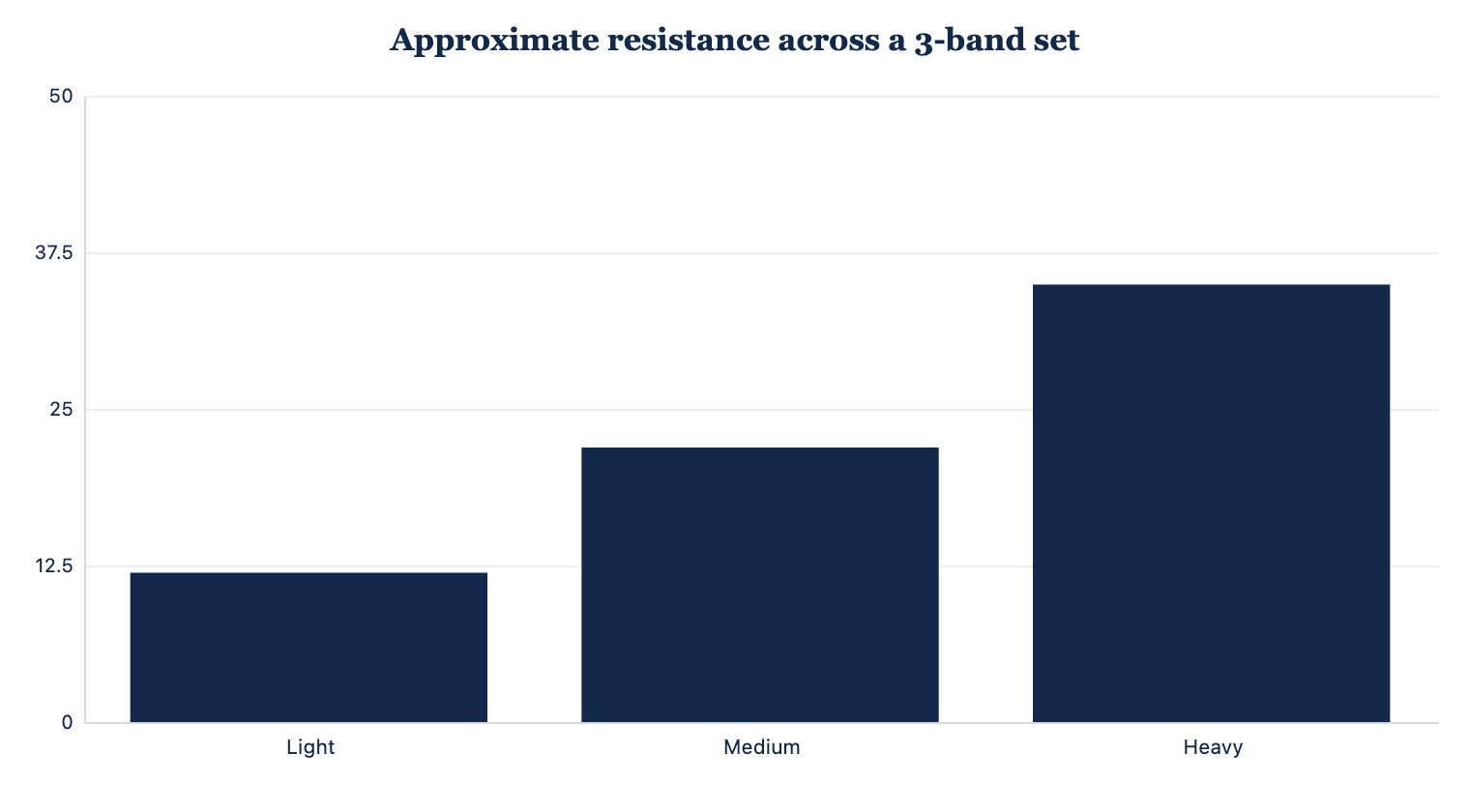
    A typical resistance spread across a three-band set.
    A typical resistance spread across a three-band set.

    Resistance Levels & Sets

    Resistance is usually sold in graded levels, often light, medium, and heavy, sometimes color-coded. Selling a set of three lets a client progress without rebuying, and it is the most popular format for both gyms and retail. The chart below shows a typical resistance spread across a three-band set, expressed as an approximate pull force; treat these as indicative ranges since exact tension varies by fabric and stitch. Color-coding the levels and printing the resistance on the band itself reduces confusion for clients following a program.

    Sizing & Fit

    Booty bands come in a few loop circumferences. A standard mini-band loop suits most users for hip and glute work, while longer loops serve taller clients and full-body movements. If you are outfitting a diverse membership, a single well-chosen standard size covers the majority, but offering two sizes reduces the number of clients for whom the band is too tight or too loose. Fabric bands have less stretch than latex, so sizing matters more; confirm the flat length and stretched length before ordering.

    Order sizeTypical buyerRecommended format
    25-100Single studio, trainerFabric, 3-band set
    250-500Gym chain, eventFabric or latex
    1000+Fitness brand, retailFabric set + pouch
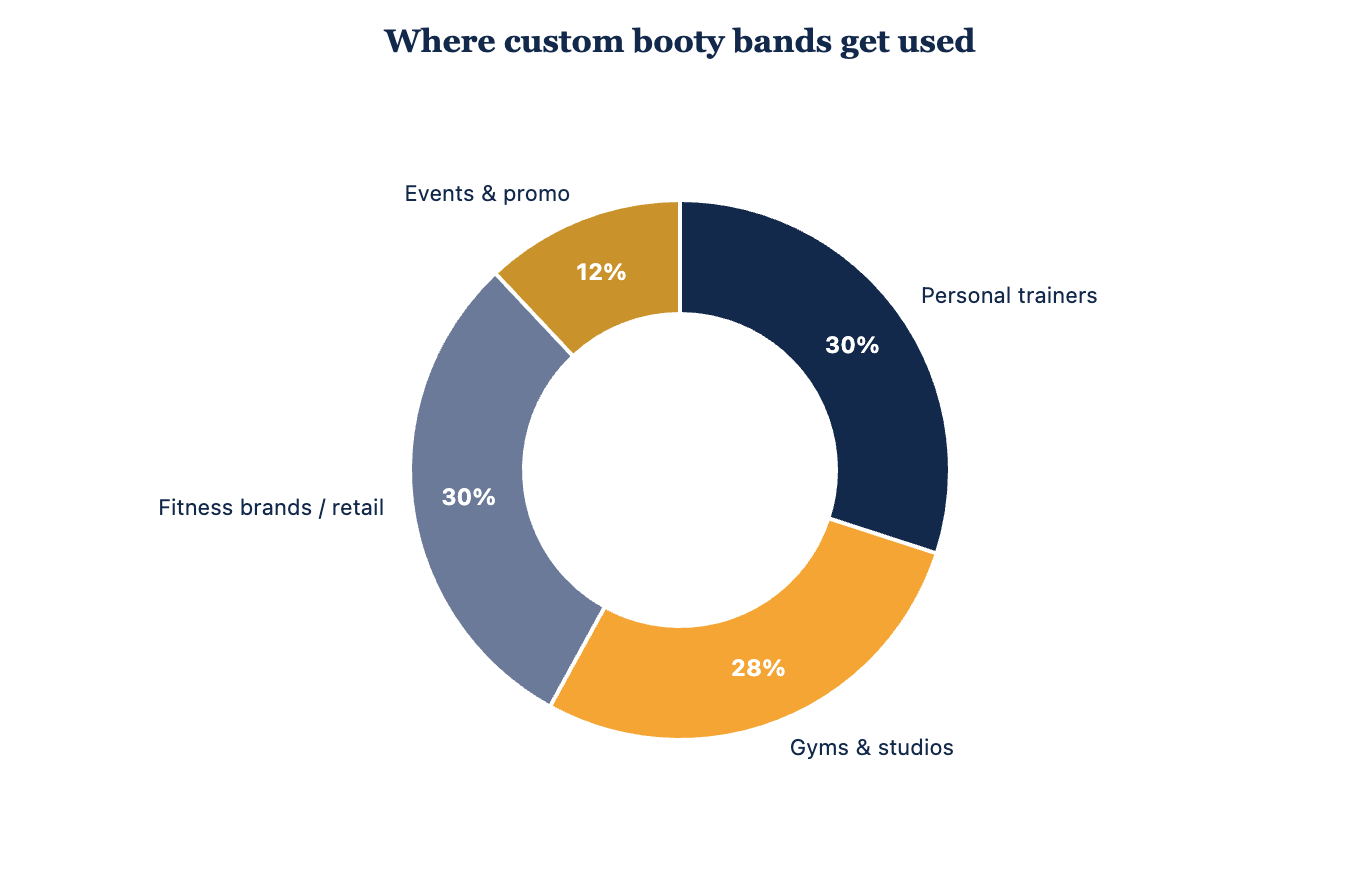
    Common buyers of custom booty bands.
    Common buyers of custom booty bands.

    Branding Your Bands

    Fabric bands take a woven or printed logo cleanly, and many brands run the logo repeated along the band so it reads from any angle. Latex bands are usually screen-printed or embossed with a single mark. Printing the resistance level and your brand together keeps the band functional and on-brand. Keep the logo simple and high-contrast, since the band flexes and a busy design distorts when stretched.

    Packaging

    A branded mesh pouch or a printed sleeve turns a loose band into a giftable product and adds another surface for your name, which matters for retail and premium client welcome kits.

    Tip: If your clients train glutes on bare skin, choose fabric over latex. The no-roll grip is the difference between a band that gets used every session and one that rolls up mid-set and ends up in a drawer.

    Quantity, Pricing & Lead Time

    Bands reach attractive per-unit pricing at moderate volume because they are small and setup is the main fixed cost. A single studio ordering a few dozen sets sits above a brand ordering by the thousand. The table maps order size to typical buyers and formats. Standard production commonly runs a couple of weeks after proof approval; request a physical sample to confirm the grip lining, the resistance feel, and the print before committing to a large run, since band feel is hard to judge from a photo.

    Choosing by Client & Program

    The best band depends on how clients train. For a studio running glute and mobility programs on bare skin, fabric bands with a grip lining are worth the premium because they do not roll, which keeps clients using them instead of fighting them. For a gym handing bands to a broad membership, a color-coded three-level set covers beginners through advanced without needing multiple SKUs. For a fitness brand selling online, a fabric set in a branded pouch photographs well and supports a retail price, while a trainer building a home-workout kit might bundle a lighter latex band for cost.

    Whatever the audience, printing the resistance level on each band reduces confusion and support questions, and it keeps your brand visible every time the client reaches for the right level in a program you designed.

    Care, Longevity & Common Mistakes

    The most common mistake is defaulting to cheap latex for clients who train glutes, then hearing complaints that the band rolls up and pinches; for that use, fabric is the fix. The second is guessing at sizing, since fabric bands stretch less than latex and a loop that is too small is uncomfortable while one too large loses tension. Confirm both flat and stretched lengths against your audience before ordering.

    For longevity, advise clients to keep bands out of direct sun and away from rough surfaces and sharp gym equipment that can nick the fabric or fray the edges. A quality fabric band holds its tension through heavy use far longer than budget latex, which is why the slightly higher unit cost usually works out cheaper per month of actual use, and why it protects your brand from the bad impression a snapped band leaves.

    The Bottom Line

    In summary, the custom booty bands clients keep using are the ones matched to how they train. Choose fabric with a grip lining for glute work on bare skin, sell graded three-band sets so clients can progress, and confirm sizing since fabric stretches less than latex. Print the resistance level and your logo together, add a branded pouch for retail, and test a sample for feel before a big run. The result is branded merchandise clients rely on at home, keeping your gym or brand in view between every session.

    Branding bands for your gym or brand?

    Tell us your quantity, resistance levels, and logo and we will recommend fabric or latex, sizing, and packaging to match.

    Get a Quote

    More info: see band materials and resistance sets or learn how we make custom booty bands. Ready to price it? Get a quote.